Container gardening
Why your potted plants are always thirsty
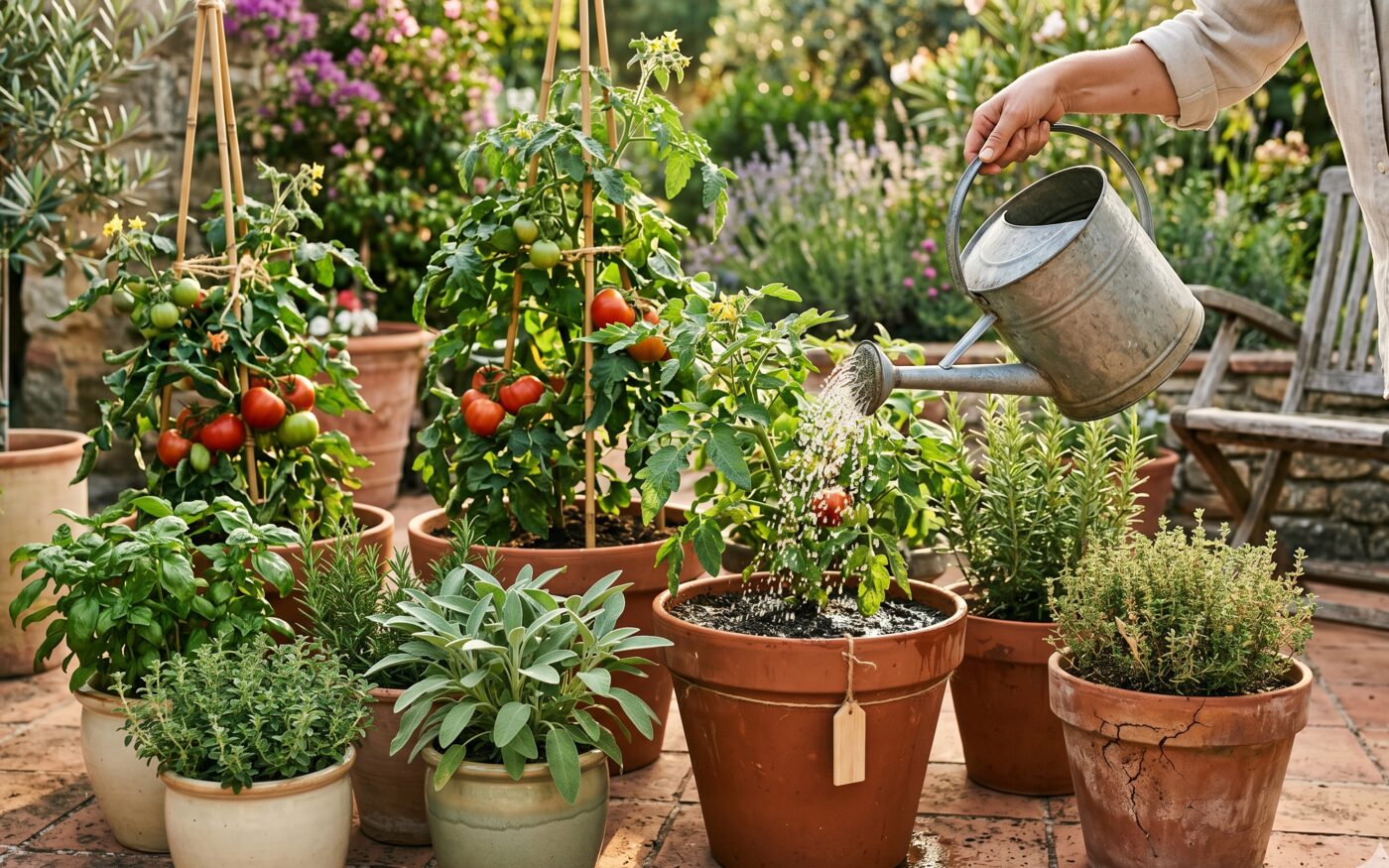
Here's a confession: the first summer I grew tomatoes in pots, I watered them exactly like the ones in my garden bed. Same schedule, same amount. The bed tomatoes thrived. The potted ones looked like they were auditioning for a drought documentary by mid-July.
It wasn't neglect. It's that a pot is a completely different world from a garden bed, and nobody tells you that when you buy the pot.
Pots play by different rules
The short answer: potted plants dry out faster than the same plant in a garden bed because a pot is a small, exposed space with a limited water reserve and no deep soil to fall back on.
A plant in the ground has cool, deep soil to draw from. A plant in a container has whatever you gave it that morning, and the heat is coming for it from every direction. The sun warms the sides of the pot, wind pulls moisture off the top, and the roots can't go looking for more because there is no more. A pot on a hot patio can dry out completely in a single afternoon.
So if your container plants wilt while your bed plants shrug off the heat, you're not doing anything wrong. You're just running a different game with different rules.
Download the free Beginner's Gardening Checklist
A simple two-page list of the supplies and seeds a first garden actually needs. Tell me where to send it and it's yours.
Form not loading? Some ad-blockers hide it. Tap here to sign up instead.
The summer container routine
To keep container plants alive in summer heat: check the soil every day, water until it runs out the bottom, and mulch the top. Three rules cover almost everything:
1. Check every day. Water most days. In real summer heat, daily watering is normal for containers. Sometimes morning and evening for small pots. The finger test still rules: dry past your first knuckle means water now.
2. Water until it runs out the bottom. A splash that wets the top inch evaporates before lunch. Pour slowly until water comes out the drainage holes. That's your proof the whole root zone got a drink, not just the surface.
3. Mulch your pots. Yes, really: mulch isn't just for beds. A couple of inches on top of the potting soil slows evaporation dramatically. It's the cheapest watering help you can buy.
Pro tip: a wilted plant at 3 PM isn't always thirsty. Some plants droop in afternoon heat to protect themselves, then perk up by evening. Check the soil before you water again. Soggy roots in a hot pot is the one problem worse than dry ones.
Set yourself up to win
A few choices make the whole summer easier. Bigger pots hold more water and forgive a missed day (small pots are the needy ones). Light-colored or glazed pots stay cooler than dark plastic or bare terracotta. Group your containers together so they shade each other's sides. And water in the early morning with a gentle shower setting. A metal hose nozzle with a soft shower setting makes the slow, thorough soak painless instead of a chore.
None of this is extra credit. It's just matching your care to what a pot actually is: a small, hot, thirsty world that depends entirely on you. The good news? Containers respond fast. Get the water right and you'll see the difference in days.
Common questions about watering pots in summer
How often should I water container plants in summer?
In real summer heat, container plants usually need water every day, and small pots sometimes need it morning and evening. Check daily: if the soil is dry past your first knuckle, water now.
Why do potted plants dry out faster than plants in the ground?
A pot is a small, exposed world. The sun warms the sides, wind pulls moisture off the top, and the roots can't go looking for more because the water reserve is limited to the pot. A container on a hot patio can dry out in a single afternoon.
Should I water a potted plant that is wilting in the afternoon?
Not always. Some plants droop in the afternoon to protect themselves, then recover by evening. Check the soil first. Soggy roots in a hot pot are a worse problem than dry ones.
Want the full beginner setup (pots, soil, and all) in one place? It's all in my Backyard Garden book for beginners.
Happy growing!
Priscilla
Get the free Beginner's Gardening Checklist
Form not loading? Some ad-blockers hide it. Tap here to sign up instead.
Plus one honest, helpful email a week. No spam, unsubscribe anytime.