Harvest season
How Can You Tell When a Watermelon Is Ripe?
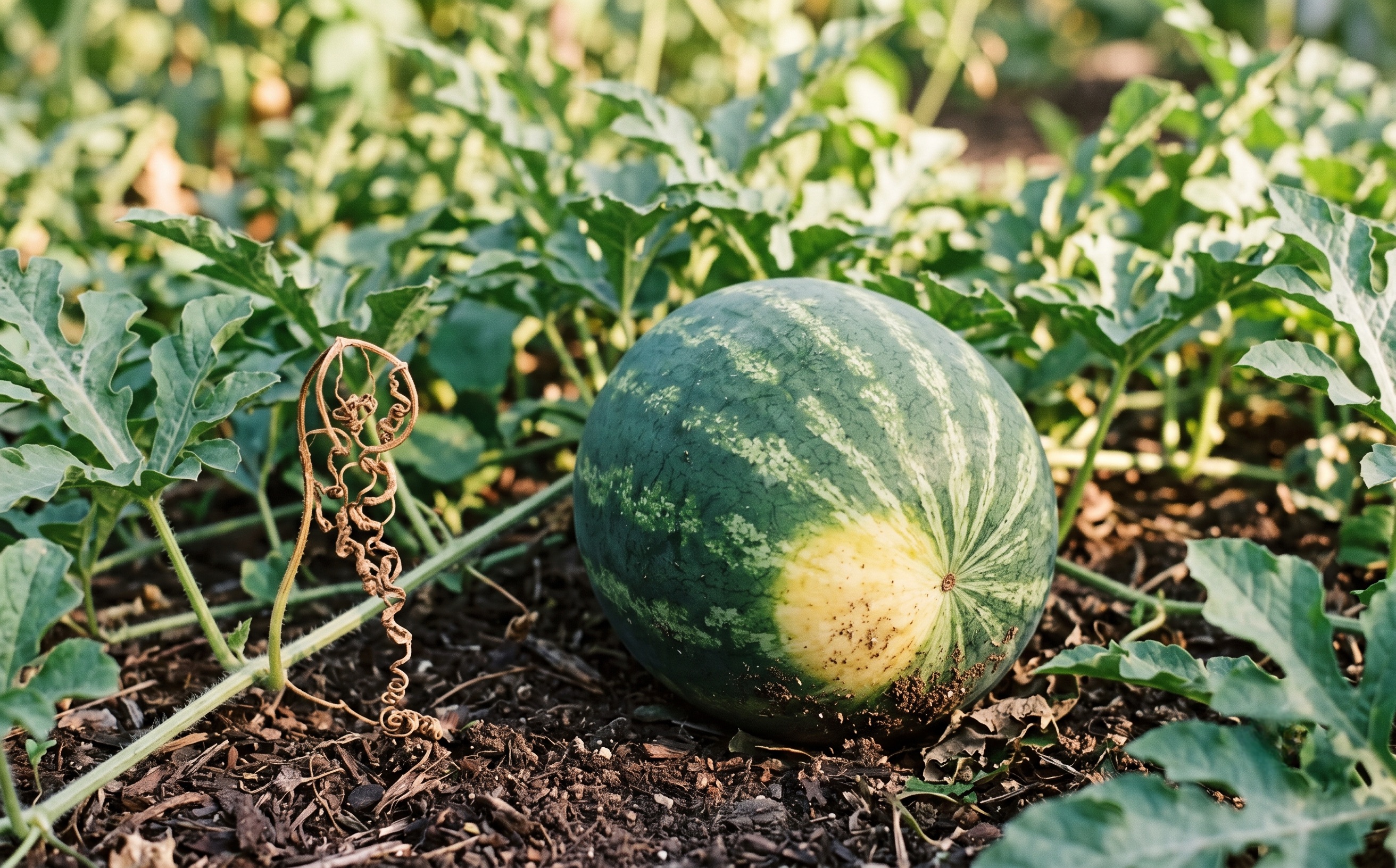
The first watermelon I ever grew, I picked about two weeks early. It was huge and I could not wait one more day. Inside it was pale pink and crunchy, closer to cucumber than dessert. I still think about that melon.
Watermelon is the one crop where timing decides everything, because it does not ripen after picking. Tomatoes redden on the counter and bananas sweeten in the bowl, but a watermelon stops the moment you cut the vine. Whatever sweetness is in there is all you get. So you have to read the melon while it's still attached, and the good news is the plant leaves you clues.
Flip it and check the field spot
The most reliable ripeness sign is the field spot: the patch on the underside where the melon rested on the ground. On a ripe watermelon it's a deep buttery yellow. If it's white, or so faint you have to hunt for it, the melon needs more time.
The spot starts out white and slowly deepens as the fruit ripens, so you can watch it change week to week. Gently roll the melon just enough to peek underneath (careful not to twist it off the vine while you're at it). Think butter, not milk. That's the color you're waiting for.
Download the free Beginner's Gardening Checklist
A simple two-page list of the supplies and seeds a first garden actually needs. Tell me where to send it and it's yours.
Form not loading? Some ad-blockers hide it. Tap here to sign up instead.
Check the tendril and the rind
Next, find the curly tendril on the vine closest to where the fruit attaches. When the melon is ripe, that little tendril dries up, turns brown, and snaps like a twig. Still green and springy? The plant is still pumping sugar into the fruit. Wait.
The rind tells the same story. An unripe watermelon is shiny, almost polished. As it ripens, the rind goes dull and matte, and the skin toughens up enough that a fingernail won't dent it easily. A glossy melon is a young melon, no matter how big it's gotten. Size lies. The tendril doesn't.
Use the thump as your tiebreaker
A ripe watermelon sounds deep and hollow when you rap it with your knuckles, like knocking on a door. An underripe one answers with a higher, tighter ring, more of a ping than a thump. The thump test is real, but it's also the easiest one to fool yourself on, so treat it as the tiebreaker instead of the whole exam.
And run one sanity check before you trust any of it: days on the vine. Check your seed packet for the days to maturity on your variety (most watermelons need 70 to 90 days, and some of the big heirlooms take even longer). If you're only at day 55, that melon isn't ripe, whatever the thump says. I've ordered from SeedsNow for years; non-GMO and they've never let me down.
Quick test: count the signs. Buttery yellow field spot, brown brittle tendril, dull rind, hollow thump. Three or four out of four, pick it. One or two, walk away and check again in four or five days. Watermelon rewards the patient and punishes the excited. Ask me how I know.
Common questions about watermelon ripeness
Do watermelons ripen after you pick them?
No. Watermelons only ripen on the vine, unlike tomatoes or bananas, so harvest timing is everything. Once you pick it, the sweetness is locked in.
What does the yellow spot on a watermelon mean?
That yellow patch is the field spot, where the melon rested on the ground while it grew. A creamy to buttery yellow spot means it ripened on the vine. A white spot, or barely any spot at all, means it was picked too soon.
One shot is all you get, so make the melon prove it: yellow belly, dead tendril, dull rind, and the thump only to settle an argument. And when you finally cut into one you called correctly, still warm from the sun? Nothing in any grocery store comes close.
Want the full beginner's path from bare patch to thriving garden in one place? It's all in my Backyard Garden book for beginners.
Happy growing!
Priscilla
Get the free Beginner's Gardening Checklist
Form not loading? Some ad-blockers hide it. Tap here to sign up instead.
Plus one honest, helpful email a week. No spam, unsubscribe anytime.