Growing tomatoes
Why your tomato leaves are turning yellow
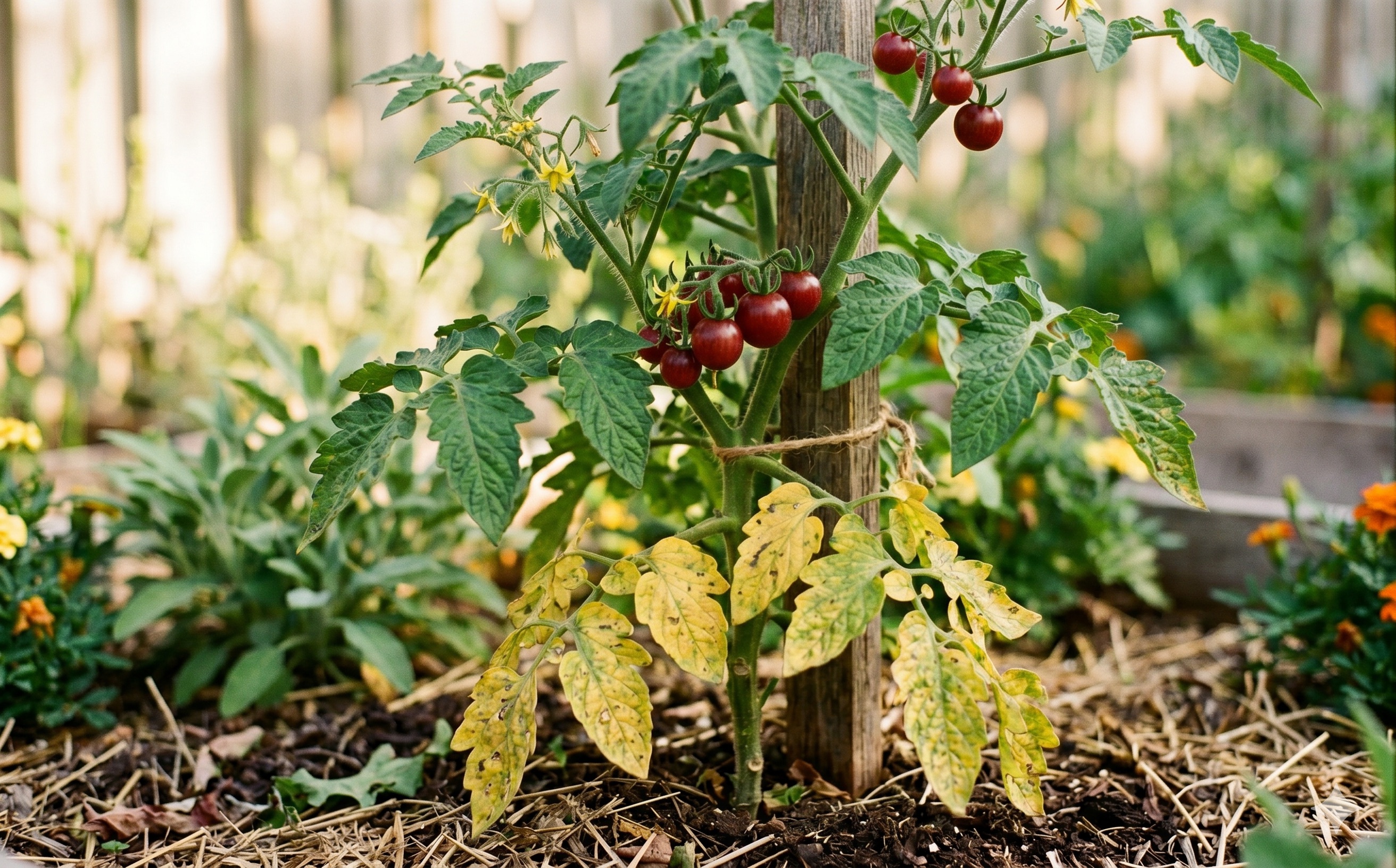
The first time I saw the bottom leaves of my tomato plant go yellow, I was sure I'd killed it. I'd babied that plant for months. Now it looked like it was rusting from the ground up, and I had no idea what I'd done wrong.
Here's what I wish someone had told me that morning: yellow leaves are not a death sentence. They're your plant talking to you. And once you learn to read where the yellow shows up, it tells you almost exactly what's going on.
Start at the bottom and read the pattern
Where the yellowing starts on the plant is your single best clue. Yellow that creeps up slowly from the lowest, oldest leaves is usually normal. Yellow that hits the whole plant, or the fresh new growth at the top, is the kind worth investigating.
So before you do anything, take ten seconds and just look. Is it the bottom leaves or the top? Slow and gradual, or fast and spreading? Are the leaves crispy and dry, or soft and mushy? Are there brown spots, or just plain yellow? Those four questions sort out nearly every case.
Download the free Beginner's Gardening Checklist
A simple two-page list of the supplies and seeds a first garden actually needs. Tell me where to send it and it's yours.
Form not loading? Some ad-blockers hide it. Tap here to sign up instead.
The most common causes (and the fix for each)
Most yellow tomato leaves come down to one of four things: normal aging, a watering problem, a hungry plant, or disease. Here's how to tell them apart and what to do about each.
1. Normal aging. If it's just the lowest couple of leaves slowly going yellow while the rest of the plant looks great, relax. A growing tomato pulls nutrients out of its oldest leaves to feed new growth, so those bottom leaves yellow and die off. It's normal. Snip them off and move on.
2. Overwatering. Yellow leaves that feel soft and limp, on soil that's always wet, mean too much water. Soggy roots can't breathe, and the plant yellows from the bottom up. Let the top inch or two of soil dry out before you water again, and make sure your pots and beds actually drain.
3. A hungry plant. If the whole plant looks pale and washed out, or the leaves are yellow with the veins still green, your tomato is hungry. Tomatoes are heavy feeders. Give it a balanced organic fertilizer and it'll usually green up the new growth within a week or two.
4. Early blight. Yellow leaves with dark brown spots ringed like a tiny bullseye, starting low and climbing the plant, are early blight, a fungus. This one you act on fast. Remove the affected leaves the moment you see them, trash them (never compost), and mulch the soil so it can't splash back up onto the plant.
Quick test: stick a finger two inches into the soil and look closely at a yellow leaf. Soggy soil plus soft yellow leaves means you're overwatering. Dry soil plus crispy edges means underwatering. Brown bullseye spots mean blight. Plain pale yellow on a plant that's otherwise fine usually just means it's hungry. The plant will tell you, if you let it.
Should you pull the yellow leaves off?
Yes, in almost every case, take them off. A fully yellow leaf won't turn green again, and leaving it on does no favors. It shades the plant, blocks airflow, and if it's diseased, it's a launch pad for spores. Snip yellowed lower leaves cleanly and bin them.
The one caveat: don't go overboard. Remove the yellow and the spotted leaves, but leave all the healthy green ones. They're the engine that ripens your tomatoes, and a plant stripped bare in summer is wide open to sunscald on the fruit.
Common questions about yellow tomato leaves
Should I remove yellow leaves from my tomato plant?
Yes. Once a leaf has fully yellowed it will not recover, and it can shade the plant, slow airflow, and harbor disease. Snip off yellowed lower leaves and throw them in the trash, not the compost, in case they carry a fungus. Just don't strip the plant bare. Remove the yellowed leaves and leave the healthy green ones to do their job.
Will yellow tomato leaves turn green again?
No. Once a leaf turns yellow the chlorophyll is gone and that leaf will not turn green again. The good news is that fixing the underlying cause, whether it is watering, feeding, or disease, stops new leaves from yellowing, and the plant puts out healthy green growth going forward.
Why are only the bottom leaves of my tomato plant turning yellow?
Bottom leaves yellowing first is usually normal. As a tomato plant grows it pulls nitrogen out of its oldest, lowest leaves to feed new top growth, so those lower leaves slowly yellow and die. If the yellowing is fast, climbs up the plant, or comes with brown bullseye spots, that points to early blight instead, and you should remove the affected leaves right away.
Want the full beginner's path from bare patch to thriving garden in one place? It's all in my Backyard Garden book for beginners.
Happy growing!
Priscilla
Get the free Beginner's Gardening Checklist
Form not loading? Some ad-blockers hide it. Tap here to sign up instead.
Plus one honest, helpful email a week. No spam, unsubscribe anytime.