Growing tomatoes
Why your tomato plant is all leaves and no fruit
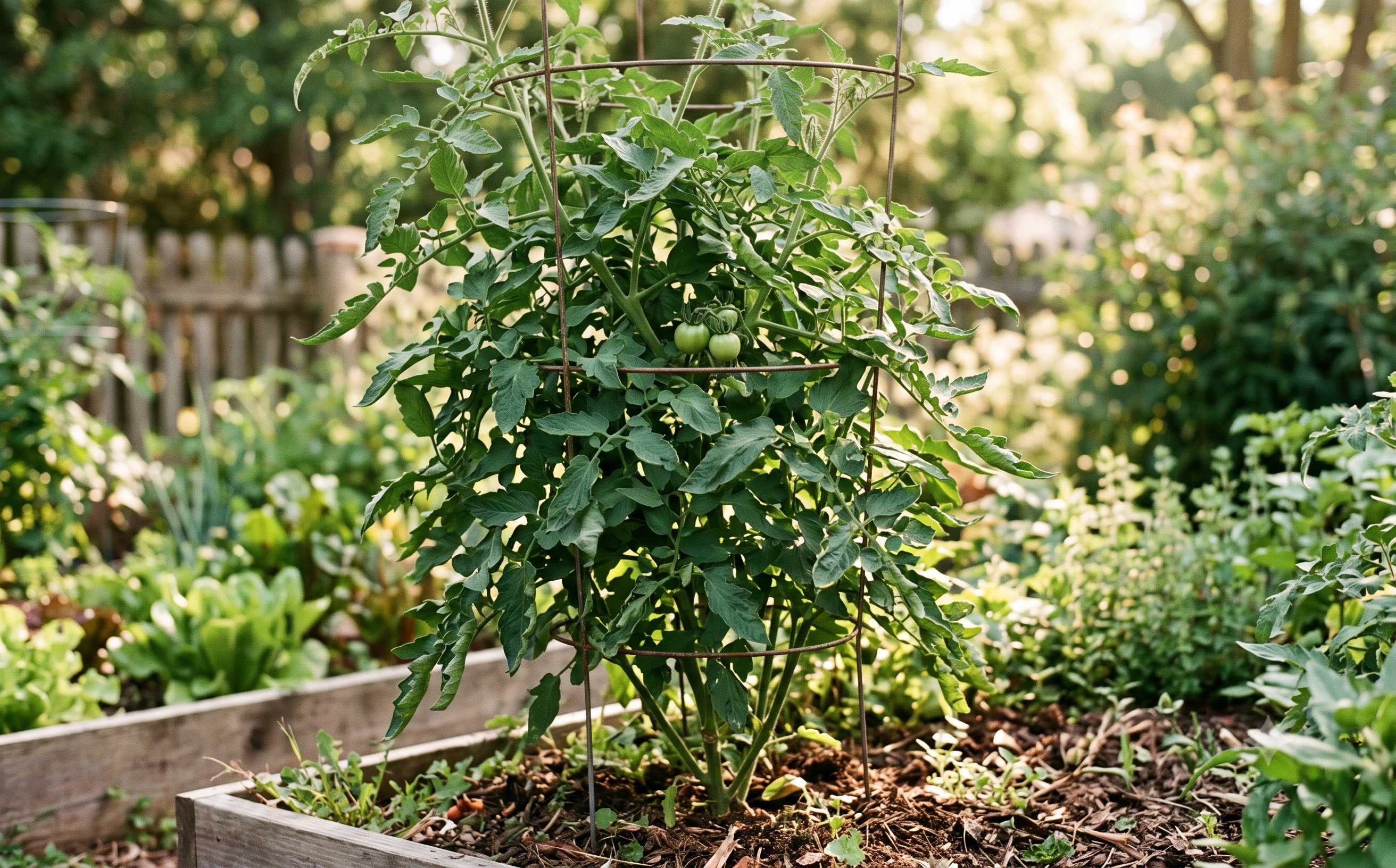
The best-looking tomato plant I ever grew gave me almost nothing to eat. It was waist high, bushy, the deepest green you can imagine. A magazine plant. And by the end of August I'd picked maybe four sad little tomatoes off the whole thing.
Turns out a gorgeous plant and a productive plant are not the same thing. If yours is all leaves and no fruit, the plant is pouring its energy into the wrong place. The good news is you can usually steer it back.
Too much nitrogen is the usual suspect
A big, leafy tomato plant with barely any fruit is almost always getting too much nitrogen. Nitrogen feeds leaves and stems, so a plant swimming in it grows lush and green and never bothers to flower.
This is the classic beginner mistake, and I made it for years. I'd grab whatever fertilizer said "grow big and green" on the front, pour it on, and reward myself with a jungle. What nobody told me is that once a tomato is past the seedling stage it needs more phosphorus and potassium than nitrogen. Those are the nutrients that push flowers and fruit, and I was starving my plants of them while drowning them in leaf food.
The fix is simple. Ease off any high-nitrogen feed (that's the N in the N-P-K numbers on the bag, and it's the first one). Switch to a fertilizer made for tomatoes, or one lower in nitrogen and higher in phosphorus, the middle number. If you've been piling on fresh compost or manure, back off that for a few weeks too. Give the plant a little while and it will get the message and start setting flowers.
Download the free Beginner's Gardening Checklist
A simple two-page list of the supplies and seeds a first garden actually needs. Tell me where to send it and it's yours.
Form not loading? Some ad-blockers hide it. Tap here to sign up instead.
Heat, shade, and lonely flowers
If your feeding is dialed in and the plant still won't fruit, look at heat, sunlight, and pollination. Any one of them can stall fruit set on an otherwise healthy plant.
1. Heat stress. When daytime temperatures push past about 90°F, or nights stay above about 75°F, tomato pollen goes sterile and the flowers can't set fruit. The plant keeps growing leaves but drops its blossoms. This one is temporary. Keep it watered, drape some shade cloth over it in the worst afternoon heat, and wait for the weather to break.
2. Not enough sun. Tomatoes need at least 6 to 8 hours of direct sun to fuel fruit. In a shady spot the plant stretches out leafy and green chasing light, but it never builds the energy to make tomatoes. If yours is tucked in a corner that only catches morning sun, that's likely your answer, and it's one to fix next season.
3. Poor pollination. Tomatoes pollinate themselves, but they need a little movement to shake the pollen loose. In a still, sheltered spot with few bees around, the flowers open and close without ever setting. Give the plant a gentle daily shake, or hold a soft brush (even a clean electric toothbrush) to the flowering stems and do the bees' job for them.
Go easy on the pruning
Over-pruning is the sneaky one. Strip off too many leaves and suckers and the plant spends its energy regrowing foliage instead of ripening fruit, and you're right back to a big green plant with nothing on it.
A little pruning helps airflow and light. A lot of it sends the plant into panic-regrow mode. Take off the lowest leaves that touch the soil and any obviously dead growth, then leave it alone. The leaves are the solar panels that feed your tomatoes. You want to keep most of them.
Pro tip: read the bag before you feed. Those three numbers (N-P-K) are nitrogen, phosphorus, potassium. For a fruiting tomato you want that first number lower than the other two, something like 5-10-10, not 10-5-5. If the first number is the biggest, that bag is why your plant is all leaves. Trust me. I learned this the expensive way.
What to expect once you fix it
A big green plant with no fruit is one of the easiest tomato problems to fix, and one of the most forgiving. The plant is already strong and established. It just needs its energy pointed at fruit instead of foliage.
Ease off the nitrogen, make sure it's getting real sun, help those flowers pollinate, and keep your pruning light. Give it two or three weeks. One morning you'll spot the first little green marbles tucked under the leaves, and from there it's all downhill in the best way.
Common questions about a tomato plant with no fruit
Is it too much nitrogen fertilizer causing all leaves and no tomatoes?
Usually, yes. Too much nitrogen is the most common reason a tomato plant grows big and leafy but sets little or no fruit. Nitrogen, the first number on a fertilizer bag, drives leaf and stem growth, so a plant getting a lot of it keeps making foliage instead of flowers. Switch to a fertilizer that is lower in nitrogen and higher in phosphorus, the middle number, and the plant will start putting its energy into fruit.
Will my tomato plant start fruiting again once the heat breaks?
Yes. If heat is the cause, fruiting is only on pause. Once daytime temperatures drop back below about 90°F and nights fall below about 75°F, tomato pollen works normally again and the plant sets fruit. Keep it watered and shaded through the worst of the heat and it will pick right back up when the weather cools.
How do I tell if it's a fertilizer problem versus a pollination problem?
Look at whether the plant is making flowers. A nitrogen problem usually means lots of leaves and very few flowers at all, because the plant is too busy growing foliage to bloom. A pollination problem means plenty of flowers that open, then dry up and fall off without any fruit forming behind them. Few flowers points to fertilizer. Lots of flowers that drop points to pollination or heat.
Want the full beginner's path from bare patch to thriving garden in one place? It's all in my Backyard Garden book for beginners.
Happy growing!
Priscilla
Get the free Beginner's Gardening Checklist
Form not loading? Some ad-blockers hide it. Tap here to sign up instead.
Plus one honest, helpful email a week. No spam, unsubscribe anytime.