Frost watch
What Do You Do With Green Tomatoes? (Ripen Them, Cook Them, or Let Them Go)
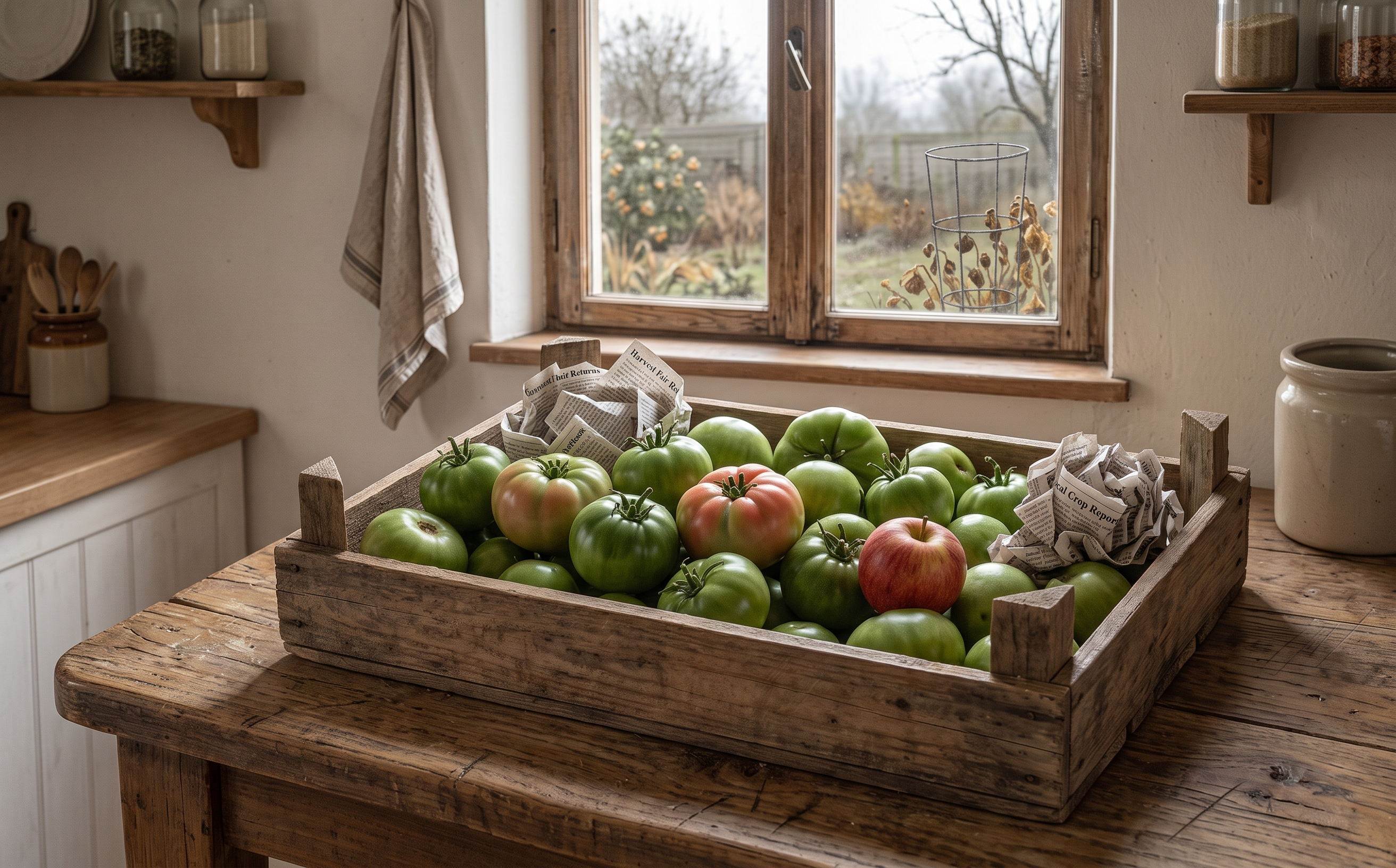
My first October, the late news said frost overnight and I went out in my pyjamas with a laundry basket. I stripped four plants bare, down to the tomatoes the size of a marble.
Then I stood in the kitchen at 6am with 30 pounds of green fruit and no plan. Most of it rotted on the counter. The little hard ones never did a single thing.
Here is what I know now, and it would have saved that basket.
What do you do with green tomatoes before frost?
Pick every tomato that has already started to turn and ripen those indoors. Cook, pickle or relish the rest. A green tomato only ripens off the vine if it reached the breaker stage before you picked it, so the mature ones go in a box somewhere cool and the small hard ones go in a frying pan.
Start pulling fruit when nights fall below about 50F, because that is the point where ripening on the vine basically stops. In zones 5 to 7 that usually lands late September into October. Zones 3 and 4 get there sooner, zones 8 and warmer often get weeks more. Watch your own ten-day forecast, not the calendar.
If the cold snap is one or two nights with mild weather behind it, throw an old sheet or row cover over the plants before dusk instead of stripping them. That buys real ripening time, and a tomato that finishes on the vine beats anything you ripen in a box. If a hard freeze is coming, pick everything and be done.
Download the free Beginner's Gardening Checklist
A simple two-page list of the supplies and seeds a first garden actually needs. Tell me where to send it and it's yours.
Form not loading? Some ad-blockers hide it. Tap here to sign up instead.
Which green tomatoes will actually ripen
Only fruit at or past the breaker stage will ripen off the vine. Look at the blossom end (the bottom, opposite the stem) for a faint whitish star pattern, and look at the colour: a tomato that is ready has shifted from glossy deep green to a duller, lighter, matte green. That one has already started ripening inside. It will finish on your counter.
A small, hard, shiny dark green tomato is still immature. It will never ripen, no matter how long you wait or how many paper bags you put it in. Mine sat there for a month proving it.
So sort the basket on the way in. Blushing or matte and full sized go in the ripening pile, hard and glossy and small go in the cooking pile, and anything cracked or soft goes to the compost, because one rotting tomato takes the whole box with it. (If cracking is what sent you out there early, that's why tomatoes split.)
Three ways to ripen green tomatoes indoors
1. Single layer in a box. Lay them stem side up somewhere cool and out of direct sunlight, not touching each other. Warmth ripens them, sun just makes them leathery. Check every few days and pull anything soft.
2. Wrapped in newspaper. Wrap each one loosely and stack them in a shallow box. That staggers the ripening, so you get a few a week through October instead of 20 in one weekend.
3. Hang the whole plant. Pull the plant, shake off the soil, and hang it upside down in a garage or basement. The fruit ripens on the vine it grew on and you skip the sorting. It looks ridiculous. It works.
Timing runs from a few days to about 28 days, depending on how mature the fruit was when you picked it, the variety, and the temperature of the room. Warm rooms ripen fast, a cool basement stretches the supply out.
Pro tip: Tuck a ripe apple or a banana in with the tomatoes and close the box. Both give off ethylene, the gas that triggers ripening, and it speeds the whole batch up. One piece of fruit per box is plenty.
The canning rule nobody tells beginners
Do not home can tomatoes from a vine that has been killed by frost. The pH of the fruit changes after the plant dies back, so those tomatoes are no longer reliably acidic enough to be safe in a boiling water bath canner. This is a food safety line, and there is no added lemon juice workaround I would put my name on.
Frosted fruit that still looks and smells fine is fine to cook and eat now, or to freeze. Just keep it out of the canner. Anything mushy or frozen through goes on the compost. If you want those dead vines gone anyway, here's how to tell when to pull your tomato plants.
Cook the ones that will never ripen
The hard green pile is genuinely good food. Slice them thick, dredge in cornmeal and fry them. Chop them into green tomato relish, the classic answer in every old farm cookbook. Blitz them with onion, garlic and lime into a salsa verde style sauce, or cook them down with vinegar, brown sugar and spice into a chutney that outlasts the winter.
If you have no time to cook this week, slice and freeze them raw on a tray, then bag them. Fried green tomatoes in February are a small act of revenge on the weather.
One thing to do today: go look at the blossom ends. Anything with that pale star gets picked and boxed, anything still hard and glossy gets a recipe, and the rest of the plant can take the frost. That is the whole decision.
Common questions about green tomatoes
Will a small green tomato ever ripen off the vine, or only the big ones?
Only tomatoes that reached the breaker stage will ripen off the vine, and size is really just a clue to maturity. Look for a whitish star pattern on the blossom end and a colour that has gone from glossy deep green to matte and lighter. A small, hard, shiny dark green tomato is still immature and will never ripen indoors. Those are the ones to fry, pickle or turn into relish.
How long do green tomatoes take to ripen indoors?
Anywhere from a few days to about 28 days. Fruit that was almost turning when you picked it can finish in under a week, while a just-at-breaker tomato can take the full month. Maturity at picking, variety and room temperature all move the number. A warm room ripens them faster, a cool basement stretches them out, and an apple or banana in a closed box speeds the whole batch up with ethylene.
Can you can or eat tomatoes off a plant that already got frosted?
You can eat them and you can freeze them, but you must not home can them. Once frost kills the vine, the fruit's pH changes and those tomatoes are no longer reliably acidic enough for safe water bath canning. Cook them fresh, freeze them, or use them in a recipe that is refrigerated and eaten soon. Anything mushy, split or frozen through goes on the compost.
Want the full beginner's path from bare patch to thriving garden in one place? It's all in my Backyard Garden book for beginners.
Happy growing!
Priscilla
Get the free Beginner's Gardening Checklist
Form not loading? Some ad-blockers hide it. Tap here to sign up instead.
Plus one honest, helpful email a week. No spam, unsubscribe anytime.