Indoor growing
What Vegetables Can You Grow Indoors in Winter? (A Beginner's Honest List)
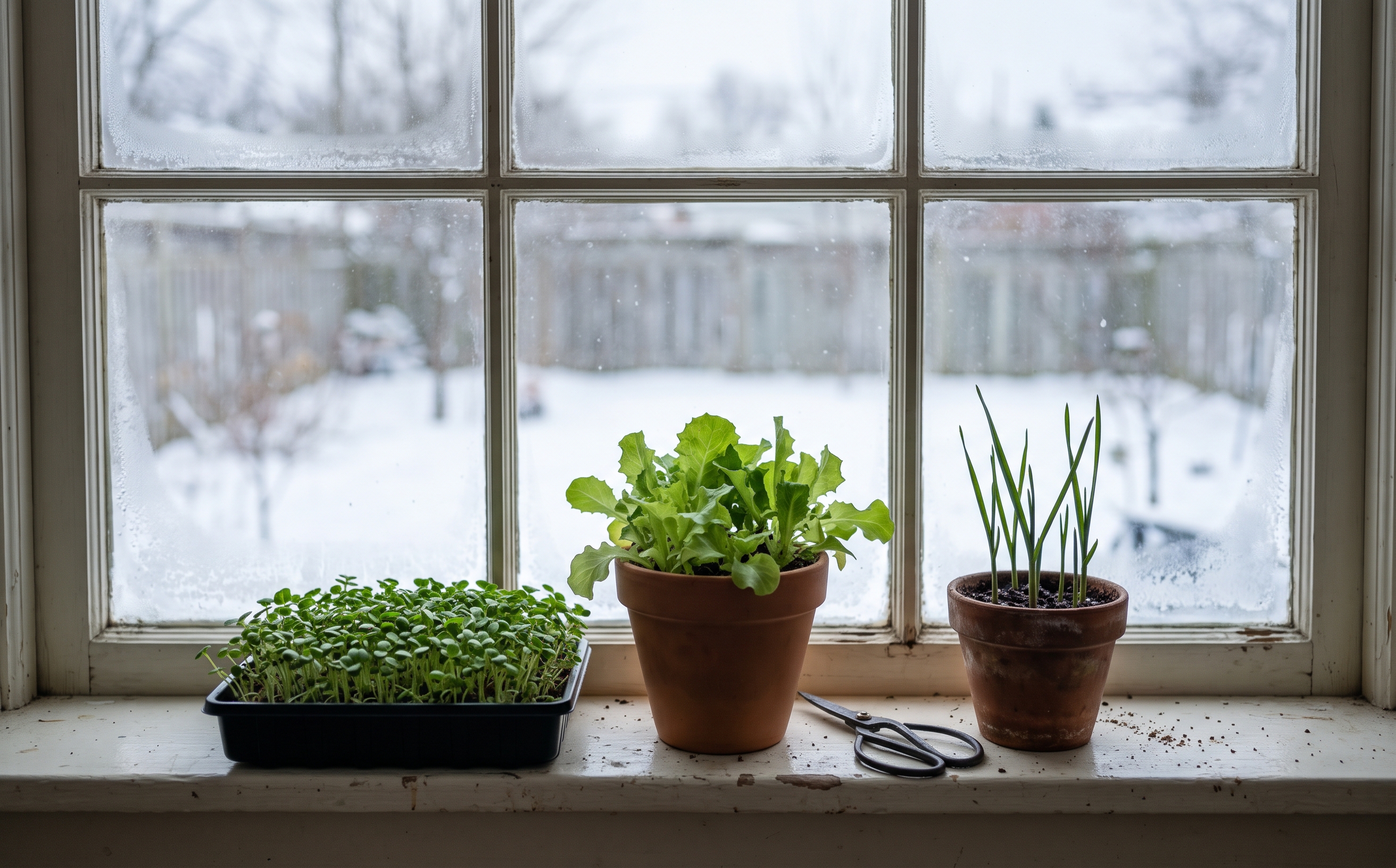
Every November I get the itch. The beds are put to sleep, the seed catalogs start showing up, and I want to eat something green that I grew myself. The indoor growing lists online make it sound like a kitchen windowsill can feed a family all winter. Some of those plants will feed you. Others turn into houseplants you water until March and never eat.
What vegetables can you grow indoors in winter?
The easiest vegetables to grow indoors in winter are microgreens, garlic greens, leafy greens picked young (lettuce, salad mix, arugula) and herbs like chives and parsley. A bright south window handles a few of them. Basil and steady salad harvests need a grow light. Tomatoes and peppers are the hard ones.
Here is the whole list, roughly from easiest to hardest.
| What to grow | Light it needs | Honest verdict |
|---|---|---|
| Microgreens (radish, kale, mustard, arugula) | A bright window works; a light keeps them sturdier | Start here. Most are ready to cut in 12 to 14 days, closer to 3 weeks for big seeds like peas. |
| Garlic greens | Any bright window | The easiest thing on this list. Plant a sprouting clove in a few inches of potting mix and snip the shoots like chives. |
| Leaf lettuce, salad mix and arugula, picked young | A sunny window for a few leaves; a light for real salads | Worth it. Cut the leaves young and they grow back for a second cut 2 to 3 weeks later. |
| Chives and parsley | A sunny window | Worth it. Snip a little at a time, since winter regrowth is slow. |
| Basil | A grow light | Only with a light. On a December windowsill it stays alive and sulks. |
| Tomatoes and peppers | Strong light, kept warm | Skip for your first winter. More on that below. |
Skip the heading types like iceberg and romaine. A full head takes far longer than a cut of baby leaves, and indoors in winter that wait feels endless. Trust me.
Download the free Beginner's Gardening Checklist
A simple two-page list of the supplies and seeds a first garden actually needs. Tell me where to send it and it's yours.
Form not loading? Some ad-blockers hide it. Tap here to sign up instead.
Do you need a grow light for winter vegetables?
For a steady harvest, yes. A bright window can carry microgreens, garlic greens and a few herbs, but leafy crops and basil grow faster and stockier under a simple light. Most herbs want around eight hours of direct light a day, and a winter window often falls short.
Be honest about your window. Count the hours of actual sun it gets on a clear December day, then pick your crops from the table above. If your plants lean hard toward the glass and grow long and floppy, they're asking for more light.
If you add a light, three settings matter.
1. Hours. Run it 12 to 14 hours a day for greens and herbs. Seedlings get 14 to 16. Indoors, the guidance tops out at 16 hours a day, so there's no need to leave it on around the clock.
2. Height. Fluorescent tubes sit close, about 6 to 12 inches above the leaves. LEDs usually hang higher, often 12 to 24 inches, so follow the label on yours. Hang it from chains or adjustable cords so it can move up as the plants grow.
3. Watch the plants. If they stretch and get spindly, they need more light, so lower it a little closer.
Pro tip: plug the light into a cheap outlet timer. You think you'll remember to switch it on every morning. You won't.
If you'd rather watch than read, my video Your Windowsill Can Grow Vegetables All Winter walks through growing microgreens indoors. For seed, I've ordered from SeedsNow for years; non-GMO and they've never let me down. One warning while you shop: never grow tomatoes, peppers or eggplant as microgreens. Their leaves and stems contain toxins.
What to skip: tomatoes and peppers
Skip tomatoes and peppers for your first indoor winter. Fruiting crops need far more light than leafy ones, plus steady warmth and some help with pollination. Even a well-grown dwarf plant usually gives you a few tomatoes for a salad or sandwich.
If you want to try anyway, pick a dwarf variety like Micro Tom or Tiny Tim, keep the light within a few inches of the plant tops, and keep the room above 50°F. Treat it as a fun experiment. Your greens will feed you more.
Outdoors, November is mostly over for new sowings in cold zones. Check what you can still plant in November or in December for your area, and if you have a sprouting bulb in the kitchen, here's what to do with grocery store garlic.
Common questions about growing vegetables indoors in winter
Can you grow vegetables indoors without grow lights?
Yes, a few. Microgreens, garlic greens, chives and parsley can all grow in a bright south-facing window, and a pot of leaf lettuce will give you some leaves. Growth slows in the short days, so harvest lightly. For basil, or salad more than once a week, add a light.
Can you grow tomatoes indoors in the winter?
You can, with a dwarf variety such as Micro Tom or Tiny Tim, a light kept within a few inches of the plant tops, a room that never drops below 50°F, and some help with pollination. Expect a handful of tomatoes for a salad or a sandwich. For your first indoor winter, start with greens.
This week, put one pot on your brightest windowsill. Garlic greens if you want the easy win, a tray of microgreens if you want to eat in about two weeks. Snow outside, something green on the sill. That's a good trade for one pot of soil.
Want the beginner's steps in one place? Start with my Backyard Garden book for beginners.
Happy growing!
Priscilla
Get the free Beginner's Gardening Checklist
Form not loading? Some ad-blockers hide it. Tap here to sign up instead.
Plus one honest, helpful email a week. No spam, unsubscribe anytime.