End of season
When Should You Pull Your Tomato Plants? (How to Know the Season Is Over)
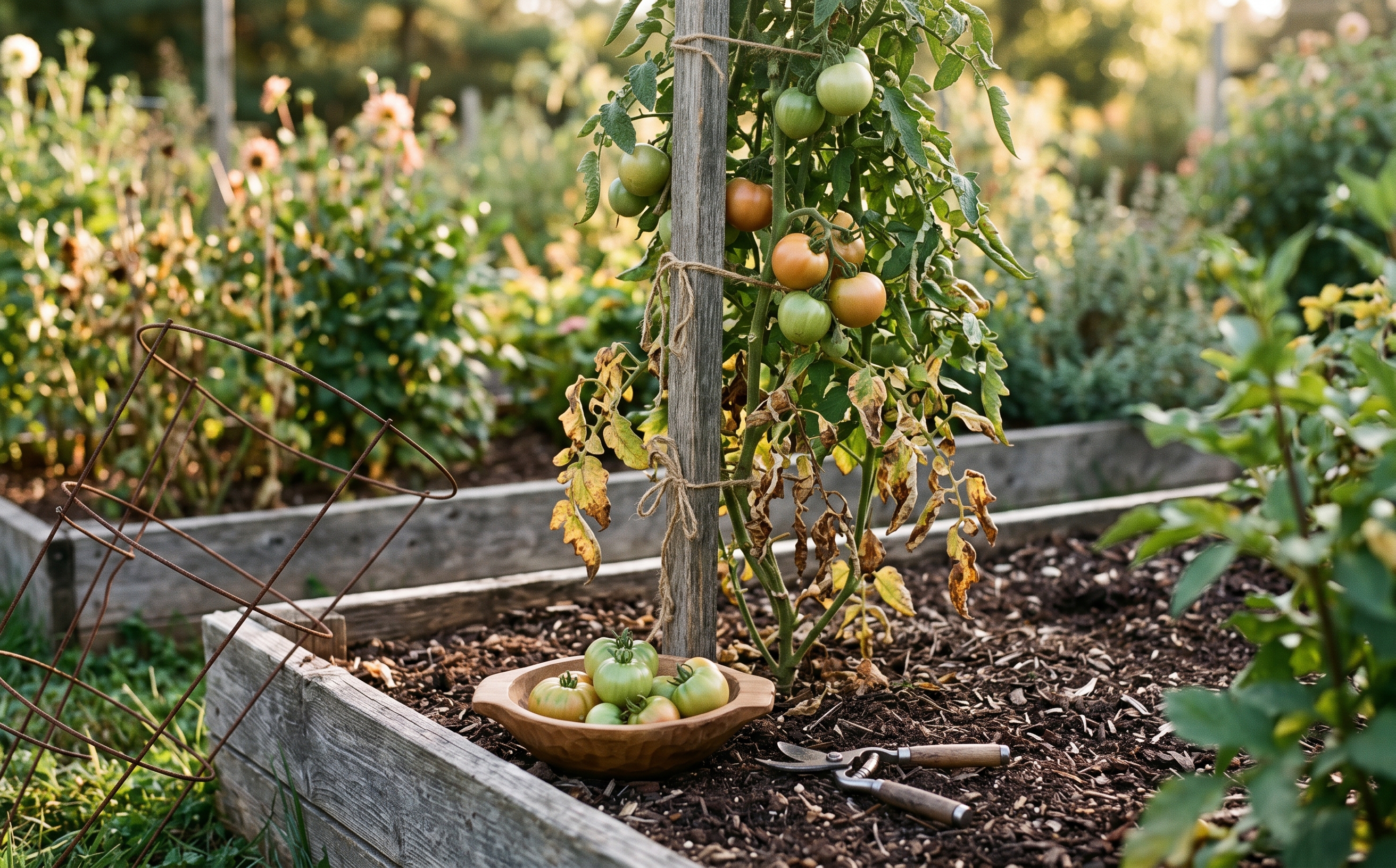
I kept a tomato plant alive until the second week of October once. It looked terrible. Yellow to the knees, three sad green marbles hanging on it, taking up the sunniest four square feet I had. I watered that thing for six weeks and got nothing, because I had decided pulling it out early was quitting.
That plant had been finished since Labor Day. I was just the last one to find out.
Here is how to read the signs, so you can stop watering a plant that has already clocked out.
Four signs the season is actually over
A tomato plant is finished when it stops setting new fruit and starts shutting down from the bottom up. You don't need all four of these. Two or three showing at once in late August or September means the plant is done producing anything you will get to eat.
1. The vines are yellowing from the bottom up. A few yellow leaves down low happen all season and mean nothing. What you're looking for is yellowing that has climbed past the halfway point, with the leaves going crisp and brown behind it. That's the plant pulling nutrients out of old growth because it has nothing left to spend. If the yellowing showed up in July instead, it was probably something fixable, and I wrote about telling those apart in why tomato leaves turn yellow.
2. No new flowers, or flowers that fall off. Walk the plant and look at the growing tips. If there are no new blossoms, or the ones that open drop within a couple of days without setting fruit, the plant has stopped starting new tomatoes. Pollen goes sterile once nights sit above 70 degrees F or below 55, so the same drop happens in a heat wave in July. In late August it usually means the season, not the weather. (Mid-summer version of this problem: why tomato flowers fall off.)
3. Disease has taken over. Early blight and septoria leaf spot chew through the lower canopy every year and a plant can still finish a crop with half its leaves gone. Late blight is different. Greasy grey-brown patches on leaves and stems, spreading in days, usually after a wet cool spell. Late blight spreads to every tomato and potato plant near you, so that one is a pull-it-today job.
4. Nights are consistently below 55 degrees F. Tomatoes essentially stop ripening below that. The fruit sits there orange and stubborn, and cold nights also make the flavor go flat and mealy. Once your ten-day forecast has nights in the low 50s and staying there, nothing new is going to finish outdoors. In zones 5 to 7 that lands somewhere between mid-September and mid-October most years.
A hard frost, meaning 28 degrees F or below, ends the argument for you. The plant will be black and slimy the next morning. If frost is in the forecast and you weren't planning to cover the plants, pick everything the day before, including the green ones.
Quick test: count the tomatoes on the plant that are full sized. Not the little green nubs, the ones that have reached the size that variety gets. If there are fewer than five, and no new flowers are opening, that plant is costing you more water and space than it will pay back. Pull it and put the bed to work.
Download the free Beginner's Gardening Checklist
A simple two-page list of the supplies and seeds a first garden actually needs. Tell me where to send it and it's yours.
Form not loading? Some ad-blockers hide it. Tap here to sign up instead.
Keep it or pull it: the beginner version
When you're unsure, ask one question: is there fruit on this plant worth waiting for? Everything else follows.
Pull it now if the plant has late blight, if it's carrying nothing but small hard green nubs that will never size up, or if you want the bed for garlic, spinach, or a cover crop. An empty bed sown in early September is worth far more than a tomato plant limping toward one more slicer. If that's your call, here's what still goes in the ground in September.
Leave it if the plant is healthy, still flowering, and you have five or more weeks before your average first frost date. Warm zones especially: a fall crop off a September-flowering plant is real.
Top it if the plant is healthy and loaded with green fruit, but frost is three to five weeks out. That's the middle option, and it's the one most beginners have never heard of.
Topping, the move that saves your green tomatoes
Topping means cutting the growing tip off every main stem, about four to six weeks before your first frost date. The plant stops making new leaves and new flowers, and puts everything it has into ripening the fruit already on it. Indeterminate varieties, the tall vining ones that keep climbing all season, are the ones this works on. Determinate bush types set their whole crop at once and don't need it.
Do it like this. Find your average first frost date (search your zip or postal code plus "first frost date"). Count back four to six weeks. On that day, snip each main stem just above the highest cluster of fruit you actually expect to ripen. Take off any flowers and any tomato smaller than a golf ball at the same time, because those are the ones stealing energy from the good fruit. Then thin out enough of the shading leaves to let sun onto the fruit, and cut your watering back by about half. Slightly stressed plants ripen faster.
You'll feel like a vandal doing it. Do it anyway. A topped plant will ripen its load one to two weeks sooner than an untopped one, and in a short season, two weeks is the difference between tomato sandwiches and a bucket of green ones.
How to pull the plant so it helps you next year
Pick everything first. Then cut the plant off at the soil line rather than yanking it, unless the roots are knotted and swollen, which is root knot nematode and means the roots need to come out too. Cutting at the line leaves the fine roots in place to break down and feed the soil.
Get the cage or stake out and scrub it. Blight spores and hornworm eggs overwinter on stakes and cages just fine, so a wipe with soapy water and a rinse now saves you a repeat next June. Rake up every fallen leaf and dropped tomato underneath the plant, because that dropped fruit is where next year's volunteer seedlings and a lot of next year's disease come from.
Then don't plant tomatoes, peppers, potatoes, or eggplant in that spot next year. Same family, same soil diseases waiting for them. Three years is the textbook rotation and two is the realistic one in a small garden.
Common questions about pulling tomato plants
What do I do with all the green tomatoes?
Bring indoors any green tomato that has reached full size and turned from hard shiny green to a duller, paler green with a faint blush at the blossom end. Those will ripen off the vine. Small hard green tomatoes never will, so use those for green tomato recipes or pickle them. Three ways to ripen the keepers: put a few in a paper bag with a ripe banana, which releases ethylene gas and speeds things up to about a week; wrap each one in newspaper and set them in a single layer in a box at 65 to 75 degrees F, checking every few days; or pull the whole plant, shake the soil off the roots, and hang it upside down in a garage or basement so the fruit ripens on the vine. Keep them off the windowsill. Direct sun makes tomatoes soft rather than ripe. The full version, including the one canning rule to never break, is here: what to do with green tomatoes before frost.
Can I compost my tomato plants?
Healthy tomato plants can go in the compost pile. Chop the vines up so they break down faster and mix them with browns like dried leaves. Do not compost plants that had late blight, early blight, septoria leaf spot, verticillium or fusarium wilt, or a heavy hornworm or whitefly infestation. Most home compost piles never get hot enough for long enough to kill those pathogens, so composting diseased vines just stores the problem and hands it back to next year's tomatoes. Bag diseased plants with your household trash, or burn them where that is legal and safe. Never leave diseased vines lying on the soil over winter, and never bury them in the bed. Wash your hands and wipe your pruners with rubbing alcohol afterward too.
Go look at your plants this week. Count the full sized fruit, check the growing tips for flowers, and look up your frost date. One of those three numbers will tell you what to do, and whatever it says, you get your bed back sooner than you thought.
Every spent plant you pull is next spring getting a head start in the dark.
Want the full beginner's path from bare patch to thriving garden in one place? It's all in my Backyard Garden book for beginners.
Happy growing!
Priscilla
Get the free Beginner's Gardening Checklist
Form not loading? Some ad-blockers hide it. Tap here to sign up instead.
Plus one honest, helpful email a week. No spam, unsubscribe anytime.