Growing tomatoes
Why Are My Tomatoes Splitting and Cracking?
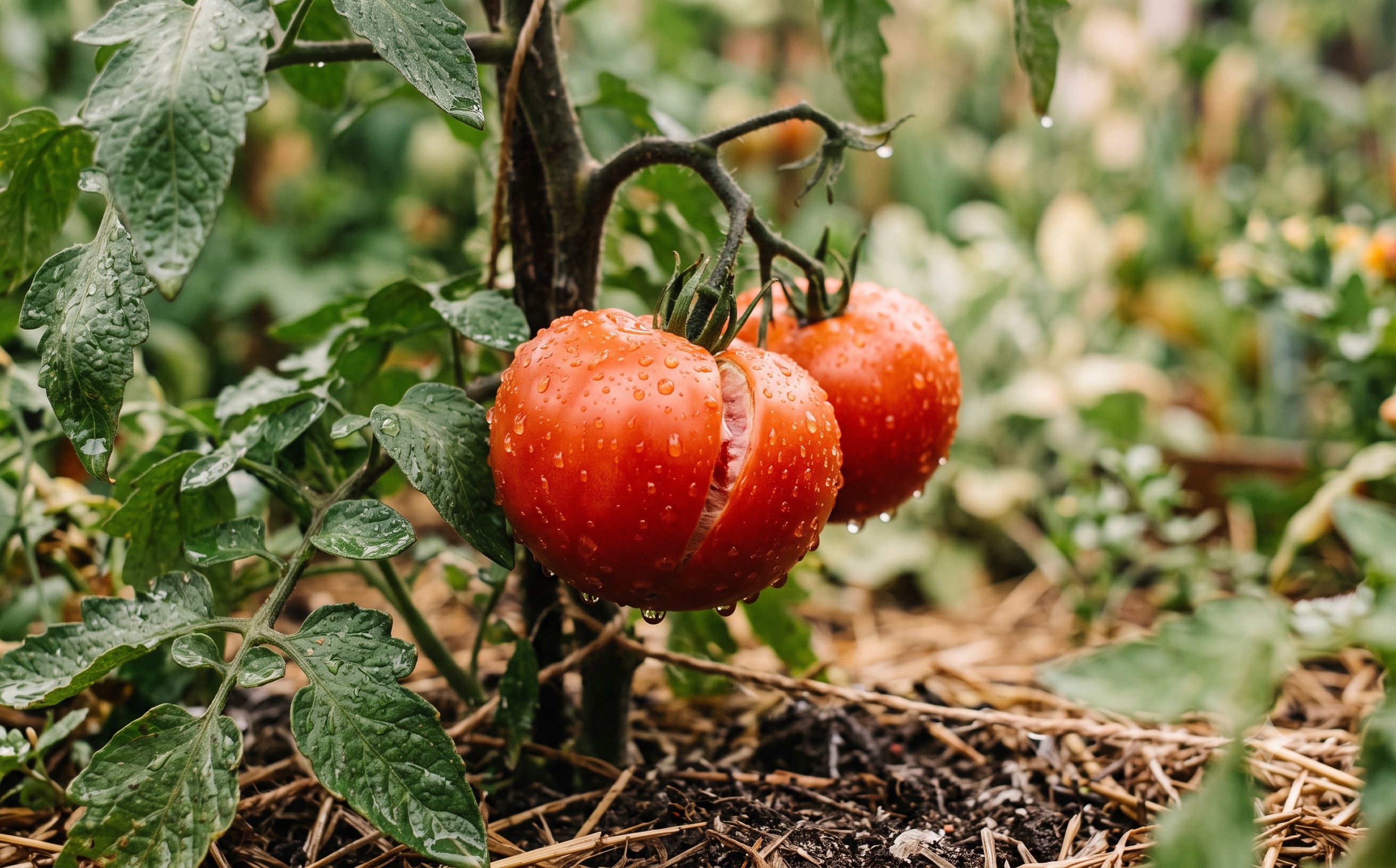
I once went to bed with the prettiest cluster of Brandywines I had ever grown. Big, heavy, three days from perfect. It rained hard overnight, and by morning every single one of them had a crack running down its shoulder like a dropped melon.
I was convinced it was a disease. I went looking for a spray. There is no spray. What happened was much simpler, and once you understand it you can mostly stop it from happening again.
What actually makes a tomato split
Tomatoes split when the inside of the fruit grows faster than the skin can stretch. That happens when the plant goes through a dry stretch, the skin gets a little tough and set, and then a heavy rain or a big watering arrives. The roots suddenly pull in more water than the fruit can hold, the flesh swells, the skin has nowhere to go, and it tears.
So the rain is only half the story. The dry week before the rain is the other half. A plant that has been watered evenly all along has a skin that is still flexible enough to stretch a bit, and it shrugs off the same downpour that wrecks a thirsty plant's fruit.
This is why it always seems to hit right at the finish line. Nearly ripe fruit has the thinnest, most stretched skin on the whole plant, and it is holding the most water. Green tomatoes almost never crack. The ones three days from your salad crack every time.
Download the free Beginner's Gardening Checklist
A simple two-page list of the supplies and seeds a first garden actually needs. Tell me where to send it and it's yours.
Form not loading? Some ad-blockers hide it. Tap here to sign up instead.
Radial cracks and concentric rings tell you different things
Look at where the crack runs, because the pattern points at the cause.
Radial cracks run from the stem down the side of the fruit like spokes on a wheel, and they are the deep, ugly ones. These are the classic swelling split and they usually come from that dry-then-soaked cycle. They open the fruit up and they can go deep enough to hit the seed cavity, which means the tomato needs eating right now or not at all.
Concentric cracks are the fine rings that circle the stem in a bullseye. They are shallower, mostly cosmetic, and they show up when fruit is exposed to a lot of direct sun and swinging temperatures. A ringed tomato is still a perfectly good tomato. Slice off the top and carry on.
Variety matters more than beginners expect. Big beefsteaks and thin-skinned heirlooms like Brandywine, Cherokee Purple, and German Johnson crack the most, because there is more flesh pushing on a thinner skin. Cherry tomatoes crack in a different way, all at once, the whole bowl of them after one rain, because each little fruit has almost no room to absorb the change. Paste tomatoes like Roma and thicker-skinned hybrids bred for shipping crack the least.
Stop pruning your plants bare
Fruit sitting in full, direct sun runs several degrees hotter than shaded fruit, and hot fruit swings harder when the water arrives. Sun-exposed tomatoes crack more, and they sunscald more too.
Beginners hear "prune your tomatoes for airflow" and take it too far. Some airflow at the bottom of the plant is genuinely good, and removing the lower leaves that touch the soil helps with disease. Above that, leave the canopy alone. Those leaves are shading your fruit and keeping its temperature steady. Strip the plant to look tidy and you will pay for it in cracked, scalded tomatoes.
Four things that actually prevent it
You cannot control the rain. You can control almost everything else that leads up to it.
1. Water deeply and on a schedule. Consistency beats volume here. Two or three deep soaks a week, same days, rather than a splash whenever you remember. In beds that is roughly an inch to an inch and a half of water a week for established plants, more in real heat. The goal is soil that never swings from bone dry to flooded.
2. Mulch. This is the single highest-return thing on the list. Two or three inches of straw, shredded leaves, or grass clippings over the root zone slows evaporation and buffers the soil, so a downpour soaks in gradually instead of hitting the roots all at once. Mulched beds crack noticeably less than bare ones in the same weather.
3. Pick at the breaker stage when rain is forecast. Once a tomato's blossom end shows a blush of pink or yellow, it has already taken everything it is going to take from the plant. It will ripen on your counter with the same flavor. Check the forecast, and the day before a real storm, walk the rows and pick anything that has started to turn.
4. Choose crack-resistant varieties next season. Look for "crack resistant" or "crack tolerant" on the packet. Jet Star, Mountain Fresh, Celebrity, Juliet, and most paste types hold up well. If you love the big heirlooms (I do), plant one or two and fill the rest of the row with something tougher, so one wet week does not take your whole harvest. I've ordered from SeedsNow for years; non-GMO and they've never let me down.
Pro tip: a tomato at the breaker stage is showing the faintest blush on the bottom, not the top. Turn the fruit over and look at the blossom end. If there is any color other than green down there, it's ready to come in ahead of the storm. Sitting stem side up on the counter, out of direct sun, it finishes in two or three days and you would never know the difference.
Can you eat a split tomato?
Usually yes, with conditions. A tomato that split today, with a clean dry crack and firm flesh, is fine. Bring it in, rinse it, cut away the split and about half an inch around it, and eat it that day.
The problem is what happens next. That crack is an open wound on a wet, sugary fruit sitting outside in warm weather, and bacteria, yeast, and fruit flies find it within hours. So a split tomato is a today tomato. Don't store it, don't save it for the weekend, and don't can it: a break in the skin can push the pH up out of the safe range for water bath canning, and that is not a risk worth taking over one tomato.
Throw out anything that is oozing liquid, has white or grey fuzz in the crack, feels mushy around the split, or smells sour or fermented. When you're unsure, you already know the answer. Compost it.
Do one thing this week
Go put mulch on your tomato bed. Straw, shredded leaves, whatever you can get, two or three inches deep, right up to (but not touching) the stems. It takes fifteen minutes and it does more to stop cracking than anything else you can do in August, because it holds the soil steady through both the dry spell and the storm.
And when the cracked ones show up anyway, and a few will, remember that they still taste exactly like tomatoes. A cracked heirloom eaten warm over the sink is one of the better things about summer. Nobody has to see it.
Common questions about splitting tomatoes
Can you still eat a tomato that has split?
Yes, as long as the tomato is fresh and the crack is clean and dry. Pick it, rinse it, cut away the split and about half an inch of flesh around it, and use it that day. A split tomato has an open wound, so bacteria and mold get in fast. Do not store it on the counter, do not put it in the fridge for later, and never use split fruit for canning, because the skin break can raise the pH and make the batch unsafe. Throw out any tomato that is weeping liquid, has fuzzy white or grey growth in the crack, or smells sour or fermented.
Should I pick my tomatoes before a big rainstorm?
Yes, pick anything that has started to change color. Once a tomato reaches the breaker stage, meaning the blossom end has turned from green to a pale pink or yellow blush, it has finished taking sugar and flavor from the plant and will ripen just as well on your counter. Fruit at that stage is also the most likely to split in heavy rain. Pick the blushing ones the day before the storm arrives, leave the fully green ones on the vine, and set the picked fruit stem side up out of direct sun to finish.
Want the full beginner's path from bare patch to thriving garden in one place? It's all in my Backyard Garden book for beginners.
Happy growing!
Priscilla
Get the free Beginner's Gardening Checklist
Form not loading? Some ad-blockers hide it. Tap here to sign up instead.
Plus one honest, helpful email a week. No spam, unsubscribe anytime.