Pests and problems
Why did my zucchini plant wilt and die overnight?
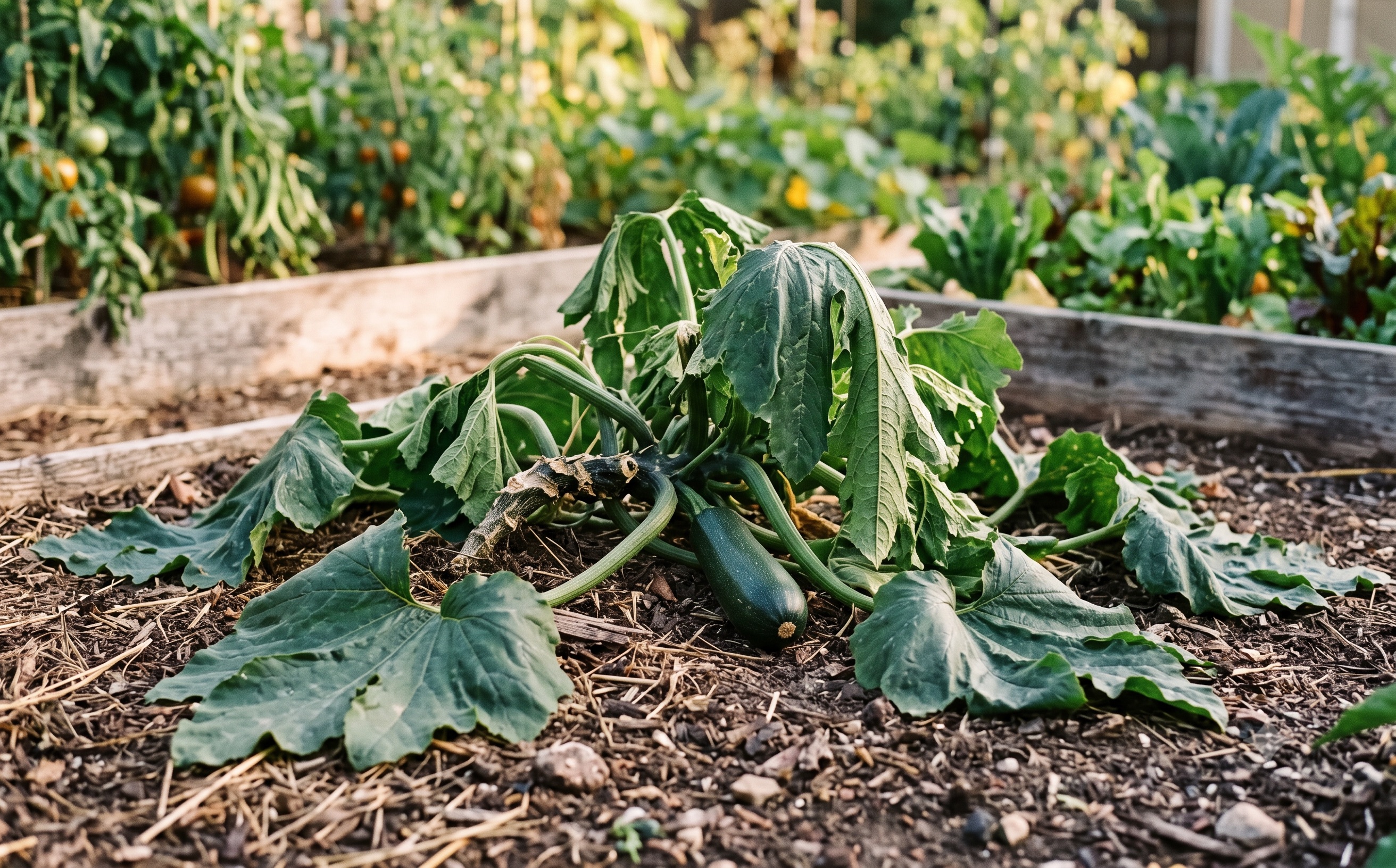
I lost a zucchini plant in a single afternoon once. Left the house with something the size of a laundry basket, already handing me two squash a week. Came home to a puddle of leaves lying flat on the soil like someone had let the air out of it.
No spots. No holes chewed in the leaves. I watered it, because that is what you do when you have no idea what else to do, and by morning it was worse.
It is almost always a squash vine borer
A healthy zucchini that collapses in midsummer with no warning has a squash vine borer in it, the vast majority of the time. There is a fat white caterpillar living inside the base of the stem, eating the tissue that carries water up to those big leaves. The plant has been cut off at the tap.
A clearwing moth that looks a lot like a wasp shows up from mid-June into early July and lays small, oval, dull-red eggs low on the vine, right around the soil line. The eggs hatch, the larvae chew into the stem, and they feed in there for four to six weeks, girdling the plant from the inside (University of Minnesota Extension). You never see any of it.
The first symptom is easy to miss, and I missed it. A day or two before the collapse, the plant droops a little in the worst of the afternoon heat and perks back up by evening. Every gardener on earth reads that as thirsty. It usually means the borer is already in there.
Download the free Beginner's Gardening Checklist
A simple two-page list of the supplies and seeds a first garden actually needs. Tell me where to send it and it's yours.
Form not loading? Some ad-blockers hide it. Tap here to sign up instead.
How to tell a borer from bacterial wilt or plain heat wilt
Get on your knees and look at the bottom six inches of the stem. A borer leaves a small entry hole with sawdust-like orange or greenish-tan frass pushed out of it (a polite word for caterpillar droppings). If you see that wet sawdust, you have your answer.
The two things people confuse it with:
1. Heat wilt. The plant flops in the afternoon and recovers overnight once temperatures drop. Those enormous leaves lose water faster than the roots can replace it, and by sunrise it looks fine again. No frass anywhere. This one fixes itself.
2. Bacterial wilt. Spread by cucumber beetles, and it does not recover, morning or otherwise. Also no frass, because nothing bored in. It tends to take one vine at a time and creep outward, while a borer drops the whole plant at once (Cornell and UConn Home & Garden Education both walk through the difference).
Quick test: if there is no frass and you still want to know, snip through a wilted stem with clean shears, press the two cut faces together for a few seconds, then pull them slowly apart. Fine sticky threads stretching between the halves mean bacterial wilt, and that plant is finished. Clean sap with no threads means go back and look harder for a borer hole.
The stem surgery that saves the plant
If you catch it within a few days of that first wilt, you can usually save the plant. Call it a 70% success rate, which beats the 0% you get from standing there feeling sad about it. It sounds gruesome and it takes five minutes.
1. Find the entry hole. Look for the frass, then the small hole it is coming out of, within about six inches of the soil line. Sometimes there are two or three holes on one plant, so keep looking after the first.
2. Slit the stem lengthwise. Use a clean, sharp blade (a craft knife works, so does a paring knife wiped with alcohol). Start at the hole and cut along the stem, never across it, opening a slit an inch or two long. You are unzipping the stem, not cutting it in half.
3. Get the caterpillar out. White or cream colored, wrinkled, dark head, up to an inch long. Pull it out with tweezers or the knife tip and step on it. Then check the rest of the slit for a second one. They rarely travel alone.
4. Bury the wound. Mound moist soil over the cut section of stem and firm it down. Squash stems root at the nodes, so that buried stem grows new roots within a week or two and takes over feeding the plant. Water deeply, give it afternoon shade for a couple of days, and leave it alone.
If you would rather not take a knife to your plant, beneficial nematodes (Steinernema carpocapsae) can be mixed with water and injected into the vine with a syringe. They hunt the larvae down inside the stem. You have to buy them live and it works slower than cutting, but it is the easier call if you have a dozen plants hit at once.
Making sure it does not happen again next year
Borers are one of the few pests where prevention genuinely works, because the moth has a narrow window and always aims for the same spot on the plant.
Wrap the lower stem. Aluminum foil or a strip of nylon stocking around the bottom four to six inches of the vine gives the eggs nowhere to sit and the larvae nothing to chew into. Start while the plant is young.
Use row cover until flowering. Float it over the bed from planting day until the first female flowers open, then pull it off so bees can get in. That covers the whole mid-June to early-July laying window.
Plant a second round in early July. Zucchini grows fast enough that a July sowing still gives you a real harvest, and it comes up after the moths have finished laying. My favorite trick, because it costs a packet of seed. I've ordered from SeedsNow for years; non-GMO and they've never let me down.
Grow butternut alongside the zucchini. Butternut and the other Cucurbita moschata squash have dense, solid stems instead of hollow ones, and borers largely give up on them (Old Farmer's Almanac has been saying so for decades). If your zucchini dies every single July, a row of butternut is the insurance policy.
One more look before you pull it
Most gardeners yank the collapsed plant, blame the heat, and never find out there was a caterpillar in it. Five minutes with a knife and a handful of damp soil can buy back a month of harvest. Go look at the base of the stem, right now, before you decide anything. The plant will tell you what happened to it.
Common questions about a zucchini plant that died overnight
Can you save a squash plant after a vine borer gets in?
Yes, roughly a 70% success rate if you catch it within a few days of the first wilt. Slit the stem lengthwise at the entry hole with a clean blade, remove the white caterpillar, then bury that section of stem in moist soil so it re-roots at the nodes.
How do I tell vine borer damage from bacterial wilt or just heat wilt?
Look at the base of the stem. Borers leave a small entry hole with sawdust-like orange frass pushed out of it. Heat wilt recovers overnight once temperatures drop. Bacterial wilt (spread by cucumber beetles) does not recover and shows no frass.
Want the full beginner's path from bare patch to thriving garden in one place? It's all in my Backyard Garden book for beginners.
Happy growing!
Priscilla
Get the free Beginner's Gardening Checklist
Form not loading? Some ad-blockers hide it. Tap here to sign up instead.
Plus one honest, helpful email a week. No spam, unsubscribe anytime.