Fall planting
Can You Plant Grocery Store Garlic? (What Happens If You Do)
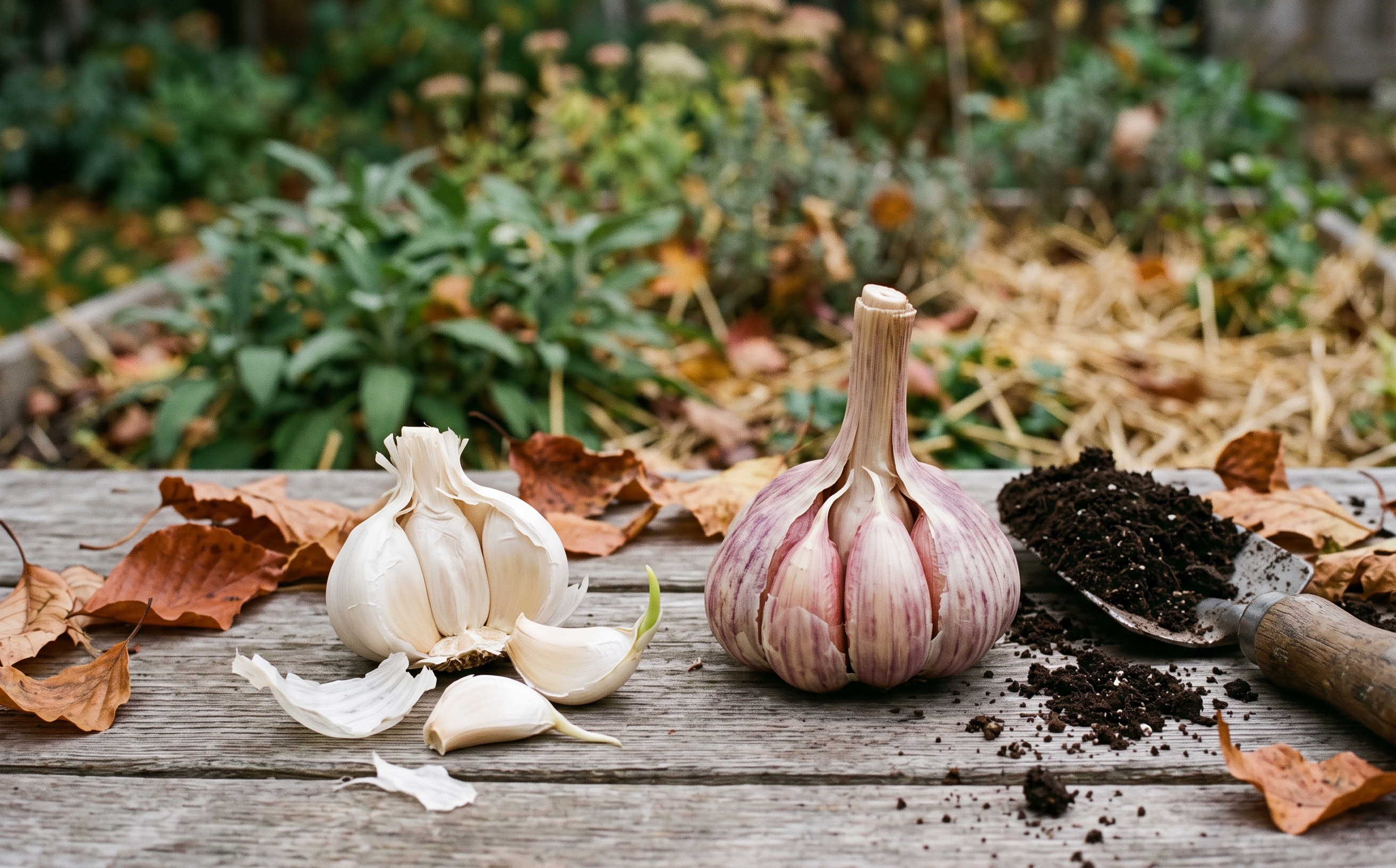
My second fall gardening, I planted six cloves out of a mesh bag from the produce aisle. Three came up. What I pulled the next July was a fistful of cloves the size of a thumbnail, and I blamed my soil.
Can you plant garlic from the grocery store?
Yes, grocery store garlic will usually grow. It is still a bad bet. Most supermarket bulbs are treated to stop them sprouting on the shelf, are close to a year old, carry no variety name, and can bring soilborne disease into your bed. Seed garlic costs a few dollars more.
That is the honest version. It will not fail dramatically enough to teach you anything, which is the annoying part. You get thin green tops in spring, then a small bulb in July that you will describe as "fine" while quietly wondering what you did wrong. Nothing. You planted eating garlic and asked it to be planting garlic.
The University of Minnesota Extension says it plainly in its home-garden garlic guide: avoid planting cloves from garlic bought at the grocery store, because most of it is treated to extend shelf life and because a bulb grown in China or California has no reason to suit your winter.
Download the free Beginner's Gardening Checklist
A simple two-page list of the supplies and seeds a first garden actually needs. Tell me where to send it and it's yours.
Form not loading? Some ad-blockers hide it. Tap here to sign up instead.
Grocery garlic vs seed garlic, side by side
Seed garlic is the same species. It is just garlic that was grown, cured, and sold to be planted rather than eaten. Here is the actual difference, laid out.
| Grocery store garlic | Seed garlic | |
|---|---|---|
| Cost | About $1 to $3 per bulb, roughly 10 cloves, so 10 plants | About $15 to $25 per pound, roughly 5 to 6 bulbs and 40 to 50 plants |
| Sprouting | Often treated with a sprout inhibitor or irradiated for shelf life, so emergence is patchy | Untreated and sold in planting season, so nearly every clove comes up |
| Disease | Not inspected for planting. Can carry white rot, basal rot, nematodes and viruses into your soil | Grown and inspected as planting stock, usually certified disease free |
| Variety | Unlabelled. Almost always a softneck grown for storage and shipping, not for cold winters | Named, with a stated hardiness range. Music, German Extra Hardy, Chesnok Red, Inchelium Red |
| Bulb size next July | Usually smaller than the bulb you planted from | Full size for the variety, and it improves each year you replant your own |
Per plant, seed garlic runs about 40 cents against about 20 cents for supermarket cloves. You are risking a nine month crop and the cleanliness of that bed to save twenty cents a plant. I have ordered seeds from SeedsNow for years; non-GMO and they've never let me down. For garlic specifically, buy from a garlic grower or a seed company that names the variety and states the zone.
The four things working against a supermarket bulb
Each of these is survivable on its own. Stacked, they are why your first bulb comes out small.
1. It has been told to stay asleep. Garlic sold for eating is treated so it does not sprout in the bag, either with a growth inhibitor or by irradiation. A treated clove either sits in the ground and rots, or comes up two weeks behind everything else. That is where the patchy row comes from, and no amount of watering fixes it.
2. It is old. Garlic is harvested in July, cured, and sold out of storage for the following twelve months. The bulb sitting in the produce aisle on September 1 was very likely pulled out of the ground the summer before last, in some cases. Seed garlic ships in September and October because it was harvested that same July.
3. It has not been inspected. This is the one that matters most, and almost nobody mentions it. White rot is a soil fungus that attacks the whole onion family, and its resting bodies survive in soil for twenty years or more with no host. Bring it into a raised bed on a cheap clove and you have lost garlic, onions, shallots and leeks in that bed for the rest of your gardening life. Seed garlic is grown as planting stock and inspected for exactly this.
4. Nobody knows what it is. Supermarket garlic is unlabelled, and the overwhelming majority of it is a softneck type chosen because it stores for eight months and ships well. Softnecks generally want mild winters. Hardnecks (Music, German Extra Hardy, Chesnok Red) are the ones bred for zones 3 to 6, and they are also the ones that give you scapes in June. Planting an unknown softneck in zone 4 is a coin flip you are running for nine months.
Quick test: squeeze the bulb before you buy anything, grocery or seed. A good planting bulb is rock hard with tight papery wrappers and no give at the base. Any softness, any dampness at the root plate, any grey dusty patch under the skin: put it back. That is rot, and it goes into your soil with the clove.
If you are going to plant it anyway, do it like this
Sometimes the answer is just "I have the bulb, it is October, and I want to try." Fair enough. Give it the best odds you can, and do it with these numbers.
Buy the right bulb. Skip the mesh three-pack and buy organic garlic from a farmers market or the organic bin, ideally grown in your own country. Certified organic garlic cannot be treated with a synthetic sprout inhibitor, which removes the single biggest problem. A local bulb also has a fighting chance of being a variety that survives your winter.
Get the timing right. Garlic goes in about two to four weeks before your ground freezes hard, which Penn State Extension describes as one to two weeks after your first killing frost. Late September to mid October in zones 3 to 5. October in zones 6 and 7. November in zones 8 and 9. You want six to eight weeks of soil below 40 degrees F after planting, because that cold period is what triggers the clove to split into a full bulb instead of growing into one fat round.
Plant it properly. Break the head into cloves the day you plant, not before, and leave the papery skin on each one. Plant only the fat outer cloves and cook the small inner ones. Push each clove pointy end up, 2 to 3 inches deep and 6 inches apart, with rows about 12 inches apart. Shallower than 2 inches and winter heaving pushes them out of the ground. Aim for loose, well drained soil at pH 6.0 to 7.0.
Mulch it and walk away. Four to six inches of straw or shredded leaves over the bed after planting. Then forget it until spring. Garlic asks for nothing all winter.
Do one more thing: plant it somewhere you can afford to lose. A container, or a corner bed, never the bed you plan to grow onions and leeks in for the next decade. If it does carry something, you have contained it.
Common questions about planting grocery store garlic
My grocery store garlic is already sprouting in the kitchen. Can I plant that?
Yes, and a sprouting clove is actually the better candidate of the two. A green shoot pushing out of the top proves the bulb was not treated with a sprout inhibitor, which is the main reason supermarket garlic fails to come up. Plant it the same way you would plant anything else: separate the cloves, keep the skins on, and set each one pointy end up 2 to 3 inches deep and 6 inches apart, with the green tip pointing at the sky. If it is fall in your zone, put it straight in the ground and mulch it. If it has sprouted in February and your ground is frozen, plant it in a pot of potting mix on a cool windowsill and use the green shoots as garlic greens, chopped like chives. Spring planted garlic rarely makes a proper bulb, because it misses the six to eight weeks of cold below 40 degrees F that tells the clove to divide. Check the base of the bulb before you commit though. Sprouting is fine. Soft, damp or mouldy at the root plate is not, and that one goes in the bin rather than your soil.
How late in the fall can I still plant garlic?
You can plant garlic right up until you physically cannot get a trowel into the ground, and it will usually still work. The target is two to four weeks before the soil freezes solid, so the clove grows roots without pushing up tall green leaves that winter will burn off. Missing that window costs you far less than planting too early does. If it is late November and the soil is still workable, plant. If the top inch has crusted over, break through it, plant at the normal 2 to 3 inches, and mulch heavily with 6 inches of straw to slow the freeze. Even garlic planted in December in a mild winter often comes up in spring, just smaller. Just don't hold the cloves in the kitchen until spring hoping for a better window. Stored cloves dry out and lose energy, and spring planted garlic without a cold period gives you a single undivided round rather than a bulb. Late in the ground beats perfect in the cupboard, every time. The zone-by-zone cutoff is in my post on whether it's too late to plant garlic.
So here is the call. If you are curious and you already have the bulb, plant it in a pot this October and find out for yourself. If you want garlic you will actually cook with next July, order a pound of a named hardneck this week, because the good varieties sell out by the end of September and the whole crop hinges on one decision you make now. Not sure which October you are in? Here is what goes in the ground in September, zone by zone, and the August list covers the ordering window. If your tomatoes are still holding the bed hostage, this will tell you whether they are finished.
Garlic is the one thing you plant while the garden is shutting down, and the one thing that is already quietly working while everything else sleeps.
Want the full beginner's path from bare patch to thriving garden in one place? It's all in my Backyard Garden book for beginners.
Happy growing!
Priscilla
Get the free Beginner's Gardening Checklist
Form not loading? Some ad-blockers hide it. Tap here to sign up instead.
Plus one honest, helpful email a week. No spam, unsubscribe anytime.