Fall cleanup
Can You Put Leaves on Your Vegetable Garden? (Yes, Shred Them First)
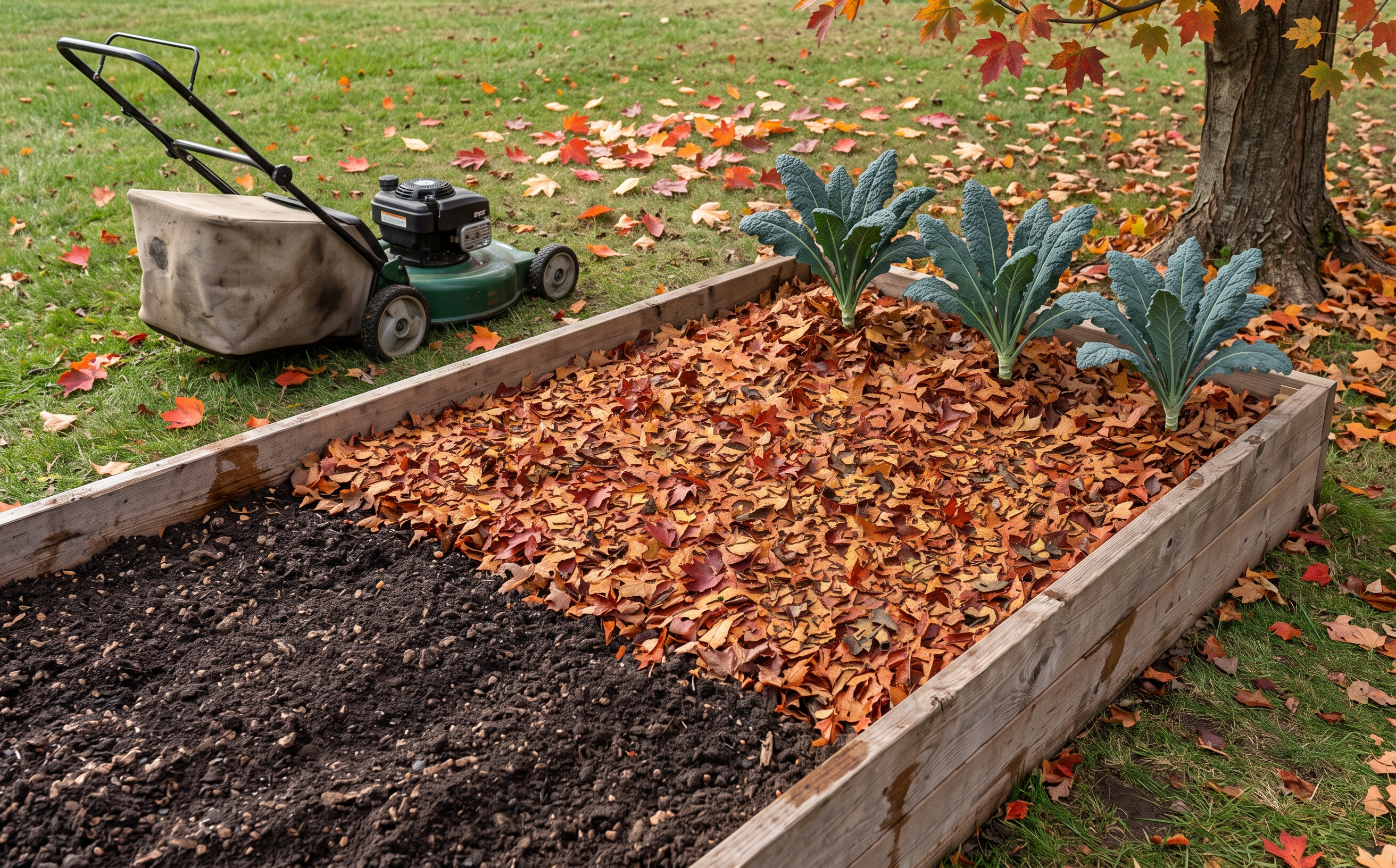
The first fall I had a big maple, I raked every leaf onto the vegetable bed whole and felt very clever about it. In April I peeled back a soggy grey mat and found cold, bare soil underneath. Leaves on a vegetable bed are a good idea. I had skipped the one step that makes them work.
Can you put leaves on your vegetable garden over winter?
Yes. Shred them first, then spread 2 to 3 inches over the cleared bed after your last harvest and before the ground freezes. Shredded leaves mat far less than whole ones and turn into soft brown mulch by spring. The one common leaf to keep off is black walnut.
That spring result comes from Illinois Extension, which says a 2-inch layer of shredded fall leaves turns into a soft brown leaf mulch by spring, one that cuts down weeds and holds moisture the following summer. Fall leaves are free fertilizer that lands in your yard every October.
This is about tree leaves. The spotted, blighted leaves off your tomato and squash plants stay off the bed, which is why the last job when you pull your tomato plants is raking up every fallen leaf underneath them.
Download the free Beginner's Gardening Checklist
A simple two-page list of the supplies and seeds a first garden actually needs. Tell me where to send it and it's yours.
Form not loading? Some ad-blockers hide it. Tap here to sign up instead.
Why do you need to shred leaves first?
Whole leaves stack flat, pack down into a wet mat, and sit there for a long time. Rutgers Cooperative Extension says exactly that about leaf mulch in a vegetable garden: leaves tend to mat down and break down slowly, so shred them first. Penn State Extension adds that shredded leaves decay much more quickly than whole ones and mat down less.
The lawn mower does the shredding. Run it over the leaves where they fell, then go back over them in the other direction. The University of Missouri says to mow twice in a crisscross pattern until the pieces are the size of confetti. A mower with a bag collects them for you, ready to tip onto the bed. Penn State's tip is to start before every leaf has fallen, because thin, dry layers chop far more easily than deep piles. Mow them first. Trust me.
The speed difference is big. In a pile, Illinois Extension says shredded leaves become finished leaf mold in about 6 months, and whole ones take 9 to 12. Shredding is the step that turns a heap of leaves into a soil amendment.
Quick test: scoop up a handful after you mow. If you can still see whole leaf outlines, mow again in the other direction. You want confetti.
Which leaves are best for a vegetable garden?
Ash is the best of the common ones. Maple, birch and oak are all good once shredded, and black walnut stays off the bed. Most leaves are heavy on carbon and slow to rot on their own: the University of Missouri puts leaves at roughly 35:1 to 85:1 carbon to nitrogen, and says anything over 30:1 composts much faster with extra nitrogen added. The ratios below come from Cornell's composting guide.
| Leaf | How fast it breaks down | For your vegetable bed | Source |
|---|---|---|---|
| Ash | Fast. About 21:1, the only one here under 30:1 | The best of these five. Fine on top or dug in | Cornell, Missouri |
| Maple | Slow on its own, about 52:1. Whole leaves lie flat and mat | Great mulch once shredded. Never spread it whole | Cornell, Rutgers |
| Birch | Slow on its own, about 50:1 | Good mulch once shredded, same as maple | Cornell |
| Oak | Slow. About 47:1 (red oak 53:1), plus tannins that slow it down | Long-lasting mulch once shredded, and it won't sour your soil | Cornell, Colorado State, UC ANR, Illinois |
| Black walnut | The leaves carry juglone, which harms tomatoes, peppers, potatoes and eggplant | Keep walnut leaves off the vegetable bed entirely | Wisconsin, Purdue |
Oak's slow pace helps on top of a bed: UC Agriculture and Natural Resources points out that slow-rotting shredded leaves make a mulch that stays in place. The idea that oak leaves sour your soil is a myth, covered in the questions at the bottom.
Black walnut is the one real exception. Wisconsin Extension and Purdue Extension both say not to mulch with walnut leaves, and Wisconsin lists tomato, pepper, potato and eggplant among the vegetables most vulnerable to juglone, which can wilt and kill them. Rake walnut leaves up on their own, keep them out of the pile you're saving for the garden, and send them out with the yard waste pickup.
Should you leave leaves on top as mulch, or dig them in?
Leave them on top. It's less work, and there's no timing to get wrong. Spread the shredded leaves over the cleared bed in fall, then in spring either plant straight through them or rake them aside where you're sowing seed.
Digging in works too, on one condition: do it in fall, with months to go before planting. Illinois Extension's version is 6 to 8 inches of leaves spread on the garden and tilled in, which improves tilth, drainage and organic matter. Colorado State Extension suggests the same 6 to 8 inches, chopped if possible, moistened and given a little fertilizer, then tilled in or planted into come spring.
The version to avoid is raw leaves dug in right before you plant. Microbes breaking down all that carbon pull nitrogen from the soil, and UC Agriculture and Natural Resources says that at planting time they compete with your plants for it. Raw leaves dug in at planting time leave your seedlings short of nitrogen. Whole, dry leaves still sitting in a bag in April belong in the compost pile, not in the bed you're about to sow.
Can you put leaves in raised beds?
Yes, and a raised bed is the easiest place to do it. The rules don't change: shred, spread 2 to 3 inches, and get it done before the soil freezes. The walls hold the layer in place, so less of it ends up in the neighbour's yard, and raised beds settle every year as the organic matter in them breaks down, so a winter of leaves is a free top-up.
The one raised bed catch is spring. Raised beds warm up early, which is half the reason to have one, and a mulch layer slows that down: Rutgers notes that natural mulches keep soil cooler and should not go on before the soil warms in spring. As soon as the soil thaws, rake the leaves back off any row you plan to seed and let the sun at it. Leave them on the paths and around transplants.
If a black walnut grows nearby, put the garden somewhere else if you can. If you can't, Purdue Extension says raised beds give you protection, as long as the bed is built to keep the tree's roots out and kept free of walnut leaves and nuts.
When and how deep should you spread leaves?
Spread them after your last harvest and before the ground freezes solid, 2 to 3 inches deep if they're staying on top. The freeze deadline matters most if you're leaving carrots or beets in the ground over winter: mulch over frozen soil just insulates the freeze in, which is why overwintering carrots need their blanket on while the soil is still soft.
Zone 5. First freeze usually lands early to mid October. Clear the beds as the frost finishes them, and spread leaves through the second half of October as they come down.
Zone 6. First freeze mid to late October. Late October into November is your window.
Zone 7. First freeze late October into early November. Spread them through November as the beds come clear.
Those are the same rough windows I gave for carrots, with the same warning: zone numbers rate how cold your winter gets, not when your first frost arrives, so look up the first frost date for your own town.
For depth, 2 to 3 inches of shredded leaves is right for a bed that is resting over winter. Illinois uses 2 inches, and Penn State suggests 2 to 4 inches as a mulch layer around shrubs and perennials. Rutgers wants at least 3 inches when the job is summer weed control. Over fall-planted garlic, go deeper: four to six inches of straw or shredded leaves, because that bed is keeping something alive until spring.
Common questions about leaves on a vegetable garden
Do fall leaves make your soil acidic?
Not enough to worry about. Oak leaves are acidic when they fall, around pH 4.5 to 4.7, but Illinois Extension says they break down to neutral or slightly alkaline, and that thanks to natural soil buffering, leaf mulch has no significant effect on soil pH in most soil types. Penn State Extension points to Michigan State research that found no effect on soil pH from mulching either oak or maple leaves into a lawn. The acid leaf rule is a myth you can safely ignore. A soil test settles it for your own bed.
Will leaves rob nitrogen from next year's plants?
Only when you dig raw leaves in close to planting time. Soil microbes use nitrogen to break down carbon-heavy leaves, and UC Agriculture and Natural Resources calls this immobilization: it is temporary, and the nitrogen goes back into plant-available form when the microbes die off. Leaves left on top are the gentler option, though Rutgers says gardens mulched with natural materials need some extra nitrogen early in the season, and that nitrogen is released to your plants later once the breakdown is complete. Over time, leaves add nitrogen: Illinois Extension puts a 2-inch layer of leaf mulch at about 150 pounds per acre.
One thing to do this week: pick the bed you're finished with, run the mower over the first leaves that come down, and spread 2 inches of confetti across it. The trees drop next year's soil in your yard every October. All it asks of you is a mower and a free afternoon.
Want the full beginner's path from bare patch to thriving garden in one place? It's all in my Backyard Garden book for beginners.
Happy growing!
Priscilla
Get the free Beginner's Gardening Checklist
Form not loading? Some ad-blockers hide it. Tap here to sign up instead.
Plus one honest, helpful email a week. No spam, unsubscribe anytime.