Fall cleanup
What to Do With Pumpkins After Halloween (Compost Them, Feed the Chickens, or Save the Seeds)
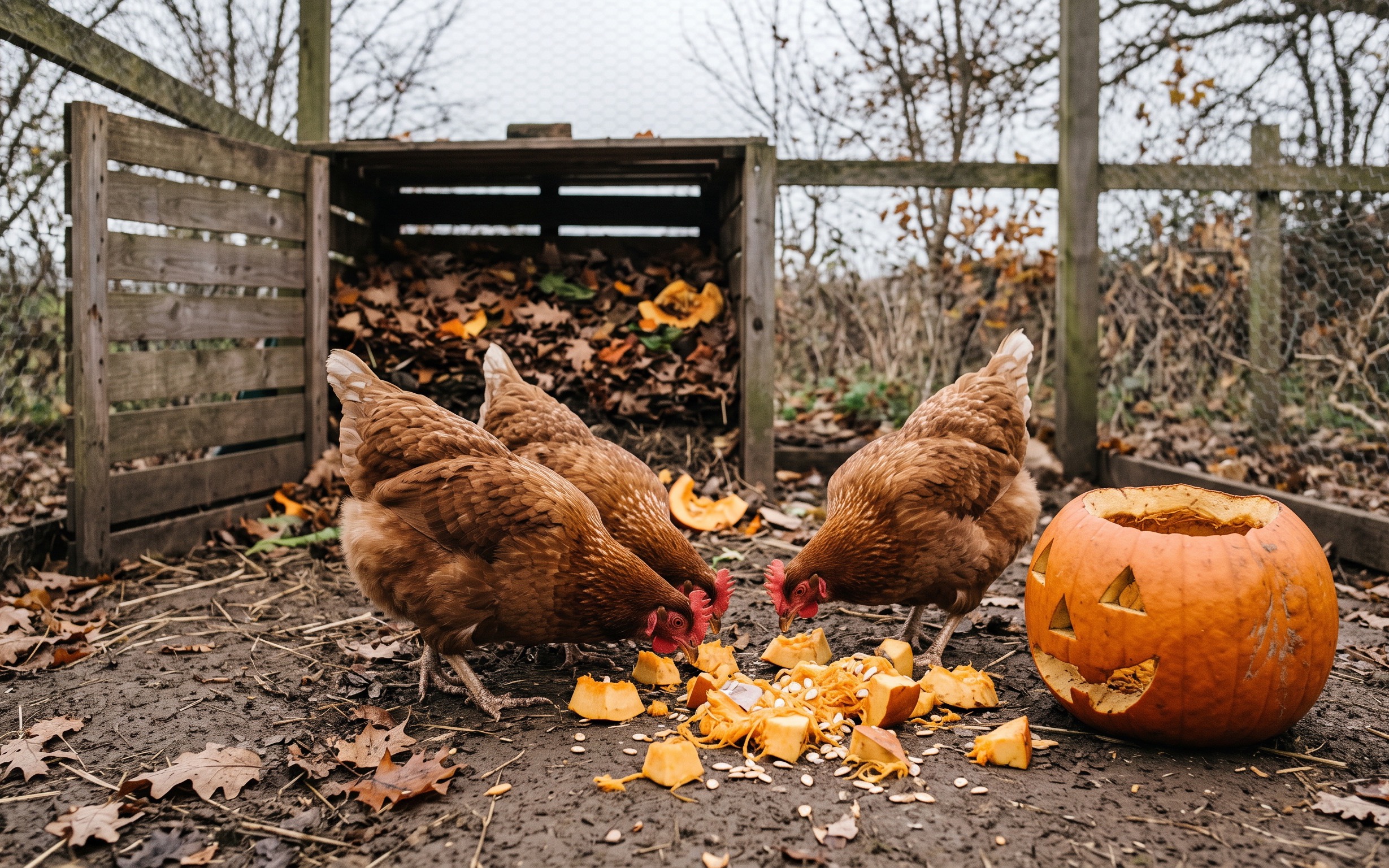
It's the first of November and there are three jack-o'-lanterns on the step. One is still firm. One has gone soft around the eyes and is starting to fold in on itself. The third is covered in glitter paint. Each one has a different best use, and none of those uses is the garbage truck.
What should you do with pumpkins after Halloween?
Sort them by condition. A firm, freshly carved pumpkin with no mold can go to the chickens or give you seeds. A soft, moldy or painted one goes in the compost once the candle, wax, stickers and paint come off. A whole, uncarved pumpkin can stay out while it's firm, or go in the oven if it's an eating type.
The whole decision fits on one table. Find your pumpkin in the left column.
| Your pumpkin | Best use | Before you do it |
|---|---|---|
| Firm, carved in the last few days, no mold | Chickens, or save the seeds | Take out the candle, scrape off every bit of wax, then chop it into chunks |
| Soft, slumping, smelly or moldy | Compost | Candle, wax and stickers out, then cut it into small pieces |
| Painted or glittered | Compost the plain parts only, and keep it away from animals | Cut off every painted or glittered piece and put those in the trash |
| Whole, never carved, still firm | Leave it on the porch, or cook it if it's a pie or eating pumpkin | Check for soft spots, and peel away any skin that has paint on it |
Mold is the line for animals. Carved pumpkins break down fast, often within days. Once you see mold or soft, collapsing spots, the chickens are out and the compost pile is in.
Download the free Beginner's Gardening Checklist
A simple two-page list of the supplies and seeds a first garden actually needs. Tell me where to send it and it's yours.
Form not loading? Some ad-blockers hide it. Tap here to sign up instead.
Can you feed old pumpkins to chickens?
Yes, if the pumpkin is firm, plain and free of mold. Chop it into chunks and hand over the flesh and the seeds within a few days of carving, before it starts to break down.
The rules are short. Skip any pumpkin with candle wax inside or paint on the outside. Paint can be harmful to animals that eat it, and if you treated a pumpkin with bleach to make it last longer, keep that one out of the run too, to be safe. Moldy or badly rotted pumpkin can make animals sick, so if you're unsure, it goes in the compost.
Cut it into pieces small enough for a chicken to work at, and go easy the first time. A food your flock doesn't usually get should start in small amounts so it doesn't upset their stomachs. Pumpkin is a treat. Their regular feed stays in the dish.
If the pumpkin pile has you thinking about a few hens of your own, my Chicken Raising book covers kitchen scraps and the foods to keep away from your flock.
Quick test: press your thumb into the pumpkin right next to a carved edge. Firm, clean and smells like pumpkin? Chickens. Dents, weeps, has any fuzz or smells sour? Compost.
Can you save seeds from a Halloween pumpkin?
Yes. Just don't expect next year's pumpkin to look like this year's. If your pumpkin was a hybrid, or it grew anywhere near other squash, its seeds are a gamble.
Seeds from F1 hybrids grow into a mixture of plant types, most of them worse than the parent. And pumpkins cross with other squash very easily, which is why seed savers grow only one variety in a season. You have no idea what grew next to your porch pumpkin in the farmer's field. Think of it as a fun experiment, the kind where you might get a lumpy green squash in August.
To save them:
1. Rinse off the pulp. Scoop the seeds out while you carve and wash off the stringy goo.
2. Dry them completely. Spread them thinly on a plate or tray and stir them a few times a day. They need to be fully dry before they go into storage, so give them longer than you think.
3. Store them cool. Keep them in a paper envelope in a cool, dry place. Keep them away from heat, since seeds start to suffer once they get above about 95F.
4. Plant after frost. Sow them in spring once the danger of frost has passed and the soil has started to warm.
If you'd rather know what you're getting, start next year's patch from a named variety. I've ordered from SeedsNow for years; non-GMO and they've never let me down.
How do you compost a pumpkin?
Strip it first, then chop it. Pull out the candle, scrape out the wax, peel off any stickers and cut away painted parts. Then cut the pumpkin into small pieces and bury them in your pile.
Smaller pieces break down much faster than a whole pumpkin, and turning the pile adds the air that keeps it working. If you're already raking, toss the pumpkin chunks in with the shredded leaves you're piling up this month.
No compost pile? Dig the chunks straight into an empty garden bed. They'll break down over the winter and feed the soil life your spring plants depend on.
One thing to skip: dumping pumpkins in the woods or a ditch. Rotting pumpkins smother native plants and draw animals toward the road, and in a lot of places it counts as littering.
Common questions about pumpkins after Halloween
Can chickens eat carved pumpkins?
Yes, if the pumpkin is still firm, has no mold, and was carved in the last few days. Take out the candle and scrape off all the wax, then chop the flesh and seeds into chunks. Skip painted pumpkins and any you treated with bleach, and start with a small amount if pumpkin is new to them.
Can you plant seeds from a carved pumpkin?
Yes. Rinse them, dry them completely on a plate or tray, store them somewhere cool, and plant them in spring after your last frost. They may not grow the same pumpkin, though. Seeds from a hybrid, or from a pumpkin that crossed with other squash, can come up as something quite different.
Can you compost a pumpkin with candle wax on it?
Scrape the wax off first. Candles, wax, paint and stickers all come out before a pumpkin goes in the compost. Once the pumpkin is clean, cut it into small pieces so it breaks down faster.
One thing to do this week: line up your pumpkins and give each one the thumb test. Firm ones get chopped for the chickens or scooped for seeds today, and everything else goes in the pile before it turns to soup on the porch.
A pumpkin spends one night as a lantern. Give the rest of it to the garden.
Want the full beginner's path from bare patch to thriving garden in one place? It's all in my Backyard Garden book for beginners.
Happy growing!
Priscilla
Get the free Beginner's Gardening Checklist
Form not loading? Some ad-blockers hide it. Tap here to sign up instead.
Plus one honest, helpful email a week. No spam, unsubscribe anytime.