Second season
What to Plant in September (A Zone-by-Zone Guide for Beginners)
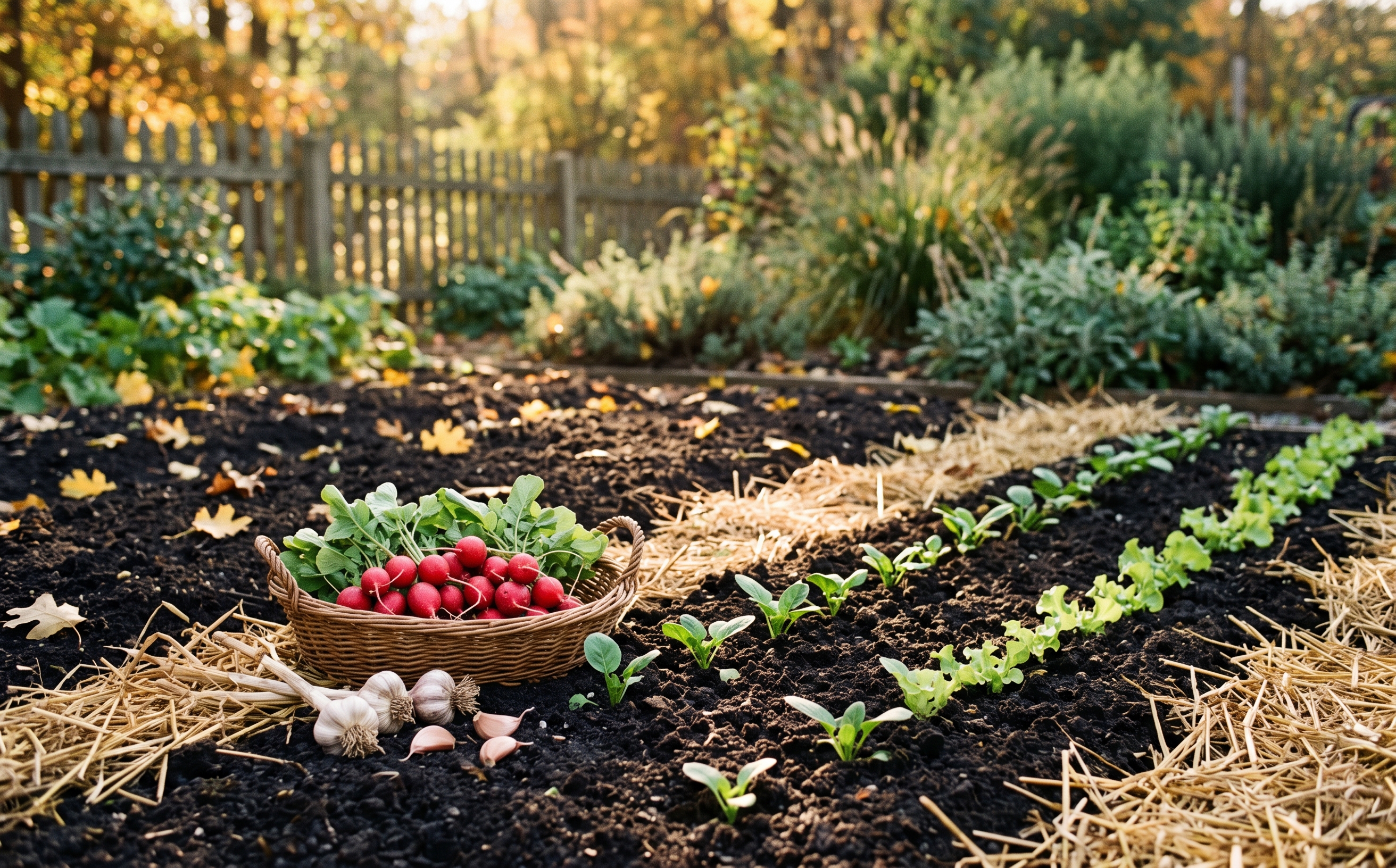
The first September I gardened, I spent the whole month pulling things out. Spent bean vines, a tomato plant that had clearly given up, the cucumber that stopped being a cucumber sometime in mid-August. By the end of it I had four clean, empty, completely useless beds, and I felt very organized about it.
Those beds sat bare until May. Nine months of nothing, because I thought September was for tidying.
Depending on where you live, September is either your last real sowing window or the start of the best gardening weather you get all year. Here is how to tell which one you have, and what to put in the ground this week.
Do this math first, before you open a single packet
Take the days to maturity printed on the seed packet, add 14 days, and count backward from your average first frost date. If today falls before that day, you can plant it. If it doesn't, pick something faster or pick a different job.
The extra 14 days matters more in September than it did in August. Daylight is dropping by two or three minutes a day now, and growth slows with it. A packet that says 45 days is describing June, when a plant gets fifteen hours of light. In late September that same crop is working with twelve and falling, so give it the cushion. Spring math in autumn leaves you a week short of harvest with frost on the way, which is a genuinely annoying way to lose a bed.
You need one number to run any of this: your average first frost date. Search your zip or postal code plus "first frost date," write it on the back of the packet, and stop guessing. Everything below hangs off that date rather than off the calendar.
Download the free Beginner's Gardening Checklist
A simple two-page list of the supplies and seeds a first garden actually needs. Tell me where to send it and it's yours.
Form not loading? Some ad-blockers hide it. Tap here to sign up instead.
September by zone
Find your band and start there. Frost dates vary within a zone, so treat these as the shape of the month and let your own date make the final call.
Zones 3 to 5 (first frost mid-September into early October). Your outdoor sowing window for a fall harvest has essentially closed. Don't force it. This month you plant garlic, sow a cover crop over the empty beds, and put in spinach or mache that will sit small over winter and take off in March. If you have a cold frame or a low tunnel, you have a completely different September: covered greens keep growing three to five weeks past your frost date, and cold-frame spinach in zone 4 is a real thing people eat in November.
Zones 6 and 7 (first frost early to late October). This is your last honest sowing month, and the first half of it is worth using. Radishes, arugula, spinach, leaf lettuce, mustard, and turnips all finish if they go in before about September 15. After that, sow greens you will cut small rather than grow to full size. Garlic goes in next month.
Zones 8 and 9 (first frost November, or none at all). September is when your garden comes back to life. Nights are finally dropping, and everything that sulked through the summer heat will grow now. Sow the whole cool-season list, set out brassica transplants, and plan a second sowing of greens in October. Kale and chard planted this month will feed you through winter.
Zone 10 and warmer. Your growing year starts about now. Heat is the limit rather than frost. Start lettuce and brassicas in trays somewhere shaded, direct sow beans, cucumbers, and squash late in the month, and put tomato and pepper transplants out in October for a winter harvest.
The crops that still finish
If you are in zone 6 or warmer and sowing in the first half of September, these are the ones with enough cushion. Days to maturity in brackets, before you add the fall factor.
Under 40 days. Radish (25 to 30) and arugula (30 to 40). Radishes are the safety net of the entire fall garden, and they actually taste better in cool soil than they do in June, when they turn hot and woody on you.
40 to 50 days. Spinach (40 to 45), leaf lettuce (45 to 50), mustard greens (40 to 45), turnips (45 to 50, and the greens are ready well before the roots), cilantro (45 to 50, which finally stops bolting once nights cool down).
50 to 60 days, zone 7 and warmer. Kale (50 to 55), Swiss chard (55), beets (55). Kale sown now and touched by a couple of frosts is sweeter than anything you grew in summer.
Sown now, harvested in spring. Spinach and mache in any zone. You sow in late September, they germinate, they make a few small leaves, and then they sit. They survive winter as tiny plants under mulch or snow and start growing again weeks before you could work the soil in spring. It costs you ten minutes now for the earliest harvest of next year.
Read the number on the packet rather than the picture on the front, because varieties of the same crop can differ by 30 days, and in September that gap decides everything. I've ordered from SeedsNow for years; non-GMO and they've never let me down.
Buy the brassicas as plants, not seeds
Broccoli, cabbage, cauliflower, and Brussels sprouts belong in a fall garden, and September is too late to start any of them from seed. They want 60 to 100 days from transplant, and seeding adds another four to six weeks on the front. The arithmetic doesn't work anywhere north of zone 8.
Buy them as transplants instead. Garden centers stock fall starts in late summer for exactly this reason, and a six-pack costs a few dollars. Set them out in the first week of September in zone 7, any time in September in zones 8 and 9, and water them daily for the first week while the roots take hold. In zones 6 and colder, transplants are still a gamble in September unless you can cover them, so let this one go and plan for August next year.
Pro tip: September seedbeds fail for the opposite reason August ones do. The soil is cooling, the sun is lower, and a bed you water on your old summer schedule stays soggy, which rots seeds and invites slugs. Water the row lightly until the seedlings are up, then back off to two deep soaks a week. Push a finger in first. If the top inch is damp, skip it.
Garlic, and the mistake almost everyone makes with it
Garlic wants to go in about two to four weeks before your soil freezes. That gives it time to grow roots without pushing up tall green tops that winter will burn off.
In zones 3, 4, and 5 that lands in late September or early October, so you are up. In zones 6 and 7, October. In zones 8 and 9, November. In zone 10 the ground never gets cold enough on its own, so buy seed garlic early, chill it in the fridge for six to eight weeks, then plant in late fall.
The mistake is planting it too early because the packet arrived and you were excited. Early garlic sends up six inches of leaves in November, freezes back, and spends its stored energy twice. If you are unsure, wait a week. Garlic forgives late far better than it forgives early.
And buy seed garlic rather than reaching for the bulb in your kitchen. Supermarket garlic is treated to stop it sprouting and nobody can tell you what variety it is, which is why it comes out small. Full explanation here: can you plant grocery store garlic?
Break the head into cloves the day you plant, keep the papery skin on, and push each clove pointy end up about two inches deep and six inches apart. Then mulch it four inches deep with straw or shredded leaves and forget about it until spring. Nine months later you pull the best garlic you have ever cooked with.
What to do with the beds you're not planting
Bare soil over winter loses nutrients to rain and snowmelt, packs down hard, and comes out of spring worse than it went in. A cover crop fixes all of that for the price of a bag of seed, and September is the month to sow one in most of the country.
For a first cover crop, sow oats with field peas. Both die outright at around 20 degrees F, so they grow a thick mat this fall, get killed by winter, and leave you a soft mulch you can rake aside and plant straight into come spring. No mowing, no digging in, nothing to fight. Cereal rye is tougher and will grow later into the fall, which makes it the pick for zones 3 to 5, but it survives winter and you have to cut it down and wait a couple of weeks before planting, so know what you're signing up for.
Where you don't sow a cover crop, at least cover the soil. Shredded leaves, straw, or finished compost, a few inches deep. Worms spend the winter pulling it under for you.
Go do one thing this week
Look up your first frost date. That single number tells you which of the four Septembers above you're living in, and everything else follows from it. Then either sow a row of radishes and one of spinach, or order your garlic, depending on what that date says.
If you're still deciding whether any of it is worth the bother this late, I made the same argument last month for August, and the beds I sowed then are feeding me now.
The garden doesn't close in September. It just gets quieter, and it asks for less.
Common questions about planting in September
Is it too late to start a fall garden in September?
In zone 6 and warmer, no. September is still a real planting month, and fast crops like radishes, arugula, spinach, leaf lettuce, mustard greens, and turnips will finish before frost if you sow in the first half of the month. Do the math before you open the packet: take the days to maturity, add about 14 days for shrinking daylight, and count back from your average first frost date. In zones 3 to 5 the outdoor window is mostly closed by mid-September, so switch to spinach and mache sown for an early spring harvest, garlic, a cover crop, or a cold frame that keeps greens going for several extra weeks.
Can I plant garlic in September, or should I wait until October?
It depends on your zone. Garlic wants to be in the ground about two to four weeks before the soil freezes, long enough to grow roots but not so early that it puts up tall green tops that winter will kill. In zones 3, 4, and 5 that usually means late September into early October. In zones 6 and 7 October is the month. In zones 8 and 9 wait until November, and in zone 10 buy your seed garlic early, chill it in the fridge for six to eight weeks, and plant in late fall. Planting garlic too early is the more common beginner mistake, so if you are on the fence in a mild zone, wait.
Want the full beginner's path from bare patch to thriving garden in one place? It's all in my Backyard Garden book for beginners.
Happy growing!
Priscilla
Get the free Beginner's Gardening Checklist
Form not loading? Some ad-blockers hide it. Tap here to sign up instead.
Plus one honest, helpful email a week. No spam, unsubscribe anytime.