Fall harvest
How to Store Carrots Over Winter (Cold, Damp and Away From the Apples)
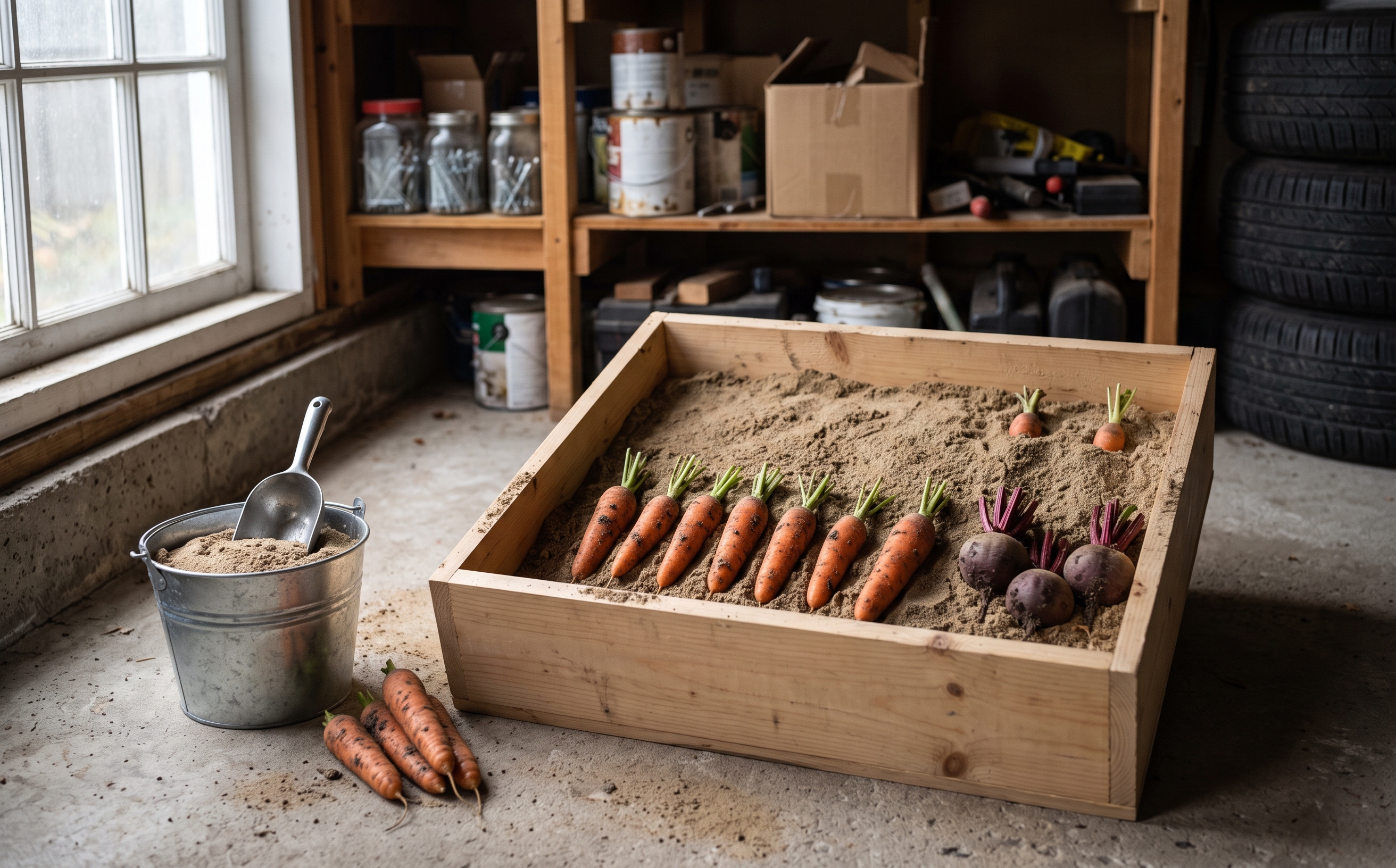
The first big carrot harvest I ever stored went into the fridge drawer right next to a bag of apples. Three weeks later they tasted like soap and bent like rubber. Carrots are one of the easiest crops to keep all winter. I had just broken both of the rules that matter.
How do you store carrots over winter?
Cut the tops off, leave the dirt on, and keep the roots cold and damp: as close to 32F as you can manage, and humid enough that they don't dry out. A small batch goes in perforated plastic bags in the fridge. A big harvest goes in a box of slightly damp sand somewhere cold. Stored that way, carrots last 4 to 6 months.
Those numbers come from Iowa State Extension, which puts the ideal at 32 to 35F and 98 to 100% relative humidity. Iowa State also gives you the two ways it goes wrong: at 40F or above, carrots will likely sprout or rot, and below 95% humidity, they wilt and shrivel. Cold and damp. Every method below is just a different way of getting both at once.
Download the free Beginner's Gardening Checklist
A simple two-page list of the supplies and seeds a first garden actually needs. Tell me where to send it and it's yours.
Form not loading? Some ad-blockers hide it. Tap here to sign up instead.
How do you get carrots ready for storage?
Cut the green tops off, brush off loose soil, and only wash them if they're muddy. That's the whole prep.
1. Cut the tops. Iowa State says to cut the greens off one half to one inch above the root. SDSU's storage table makes the same point for beets: with the green tops left on, they keep 10 to 14 days instead of months.
2. Don't scrub them. SDSU Extension says a bit of clinging dirt is fine, and muddy roots can be washed gently, as long as they're air-dried before storage. They can be slightly damp but not wet, or storage rots get their chance.
3. Sort out the damaged ones. Anything split, forked badly, nicked by the fork or showing soft spots goes to the kitchen this week. SDSU's storage guide says to store only produce free of disease and to check it regularly, pulling anything rotten before it spreads.
Not sure your carrots are big enough to dig yet? The shoulder check is in my post on when carrots are ready to pick.
What are the ways to store carrots?
There are four, and which one fits depends on how many carrots you have and how cold your winter gets. The fridge works for a handful, sand for a crop, and the ground itself for anyone willing to dig in January.
| Method | Best for | How | The catch | Source |
|---|---|---|---|---|
| Fridge, in perforated plastic bags | A small harvest | Topped, unwashed carrots in a bag with a few holes, in the crisper drawer | Fridge space, and it can't share a drawer with apples | Iowa State, SDSU |
| Box of slightly damp sand (or sawdust) | A big harvest and a cold, damp spot | Layer the roots so they don't touch, cover each layer with sand | You need a place that stays near freezing without freezing | Iowa State, SDSU |
| Garbage can buried in the ground | No cellar, but a yard | A can sunk into the soil, roots layered in damp sand, straw piled on top | Digging a can-sized hole, and digging through snow to get at it | SDSU |
| Left in the bed under mulch | Late-season carrots | A thick layer of straw over the row to keep the ground from freezing, dug as needed | The mulch has to go on before the ground freezes | SDSU |
The perforated bag matters. SDSU says most vegetables (potatoes, cabbage and cauliflower are the exceptions) store longer and stay in better shape in perforated polyethylene bags.
How do you pack carrots in sand?
Pour a layer of slightly damp sand in the bottom of a box or bin, lay carrots on it so they don't touch, cover them with more sand, and repeat. Store the box somewhere that holds close to freezing.
That method comes straight from SDSU: carrots layered in slightly moist sand, placed so they aren't touching, and covered with more sand. The point is to surround every root with cold, damp material, which is exactly the high humidity Iowa State asks for. Keeping them apart also means one soft carrot is easy to pull without disturbing the rest.
The hard part is the spot, not the sand. A root cellar is ideal. Without one, think unheated: an attached garage or an outdoor pit. SDSU's guide lists cellars, attached garages, outdoor banks, pits and mounds as storage areas, and says some basements stay cool enough, at 40 to 50F, for many vegetables. That's warm for carrots: Iowa State says they will likely sprout or rot at 40F or above. If your basement is the warm kind, the fridge is the better bet.
Quick test: slightly damp is the target, so squeeze a handful of the sand. It should hold its shape for a second, then crumble. If water drips out, it's too wet and the carrots will rot. If it pours like beach sand, sprinkle in a little water.
Why do stored carrots go bitter, limp or start sprouting?
Bitter means apples. Limp means too dry. Sprouting means too warm. Each one has a single fix.
Bitter. SDSU says carrots stored near apples pick up a bitter taste from the ethylene the apples give off, and says to at least keep them in separate crisper drawers. That was my soap-flavoured batch. SDSU names apples, melons and tomatoes as the fruits that give off ethylene, so all three live on a different shelf.
Limp and rubbery. The air is too dry. Iowa State says carrots wilt and shrivel below 95% humidity, so a loose carrot in a dry fridge or an open crate on the garage floor goes soft. Bag them, or bury them in damp sand.
Sprouting or rotting. The spot is too warm. Iowa State says carrots will likely sprout or decay if stored at 40F or above. A cheap fridge thermometer tells you which shelf, or which corner of the garage, actually stays cold.
Common questions about storing carrots
Can you leave carrots in the ground over winter?
Yes, for late-season carrots. SDSU says to pile straw mulch or a straw bale over the row to keep the ground from freezing and dig them as needed. Get the mulch on before the soil freezes. The zone timing is in my carrot harvest post, and shredded leaves work as the blanket too, as covered in putting leaves on your vegetable garden.
Should you wash carrots before storing them?
No, not unless they're muddy. SDSU says produce generally keeps longer unwashed, and anything you do wash has to air-dry before it goes into storage, because rot thrives on moisture.
How long do stored carrots last?
About 4 to 6 months at 32 to 35F and very high humidity, according to Iowa State. SDSU's storage table puts it at 5 to 6 months at 32 to 36F. Check them every couple of weeks and pull out anything soft.
Can you store beets the same way?
Yes. Beets want the same cold, humid conditions: Iowa State says trim the leaves to within half an inch to an inch of the root and store them at 32 to 35F and 95% humidity, where they last an average of 1 to 3 months. Beets and carrots can share the box of sand.
One thing to do this week: before you dig a single carrot, put a thermometer in the spot you plan to store them and check it for a couple of days. If it reads under 40F, you've found your root cellar. If it doesn't, clear a fridge drawer and buy a box of bags. The carrots are the easy part. They've been storing themselves in cold, damp dirt all fall.
Want the full beginner's path from bare patch to thriving garden in one place? It's all in my Backyard Garden book for beginners.
Happy growing!
Priscilla
Get the free Beginner's Gardening Checklist
Form not loading? Some ad-blockers hide it. Tap here to sign up instead.
Plus one honest, helpful email a week. No spam, unsubscribe anytime.