Second season
What Can You Plant in August? A Fall Harvest Planting Guide by Zone
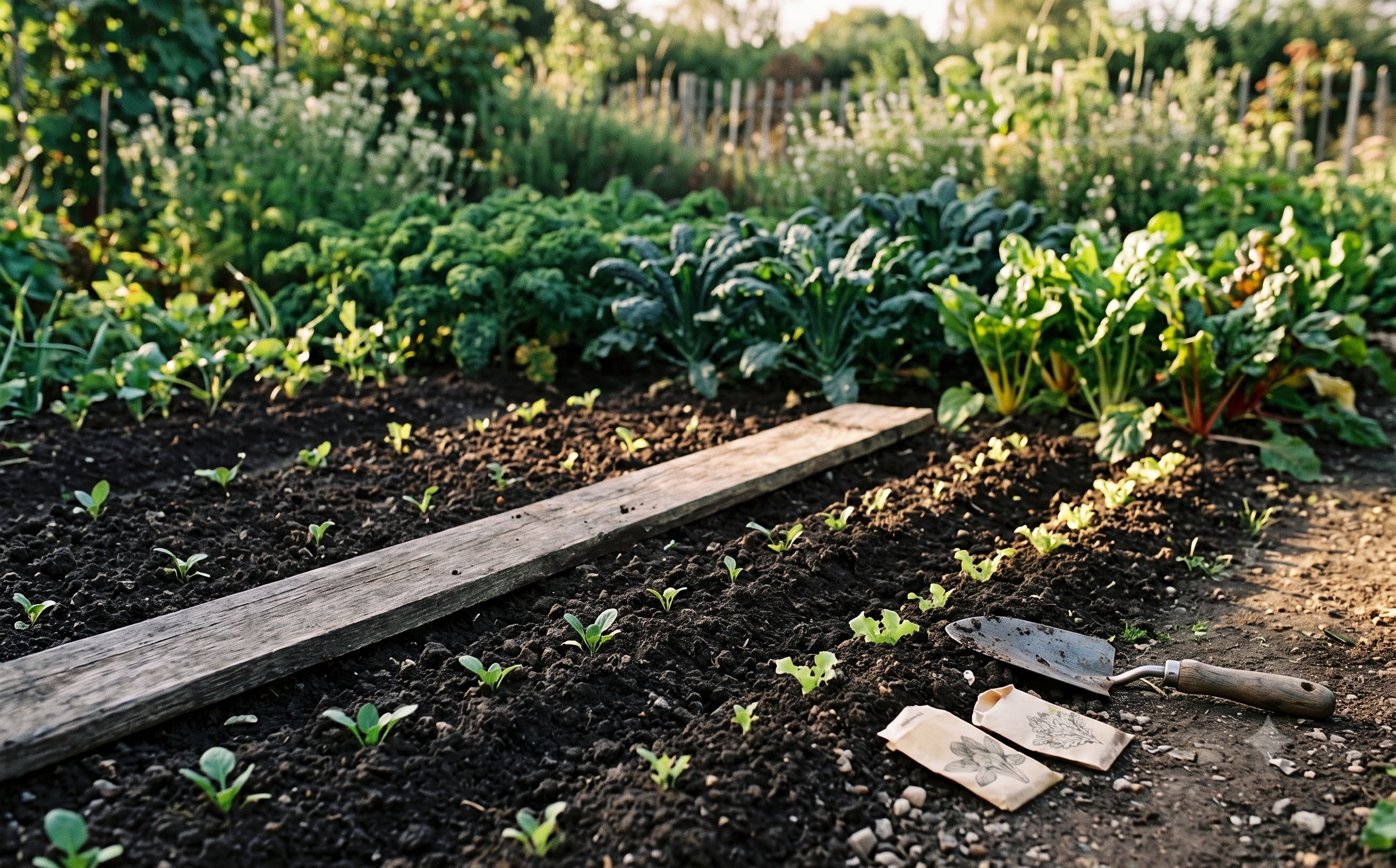
For years I treated August like the garden's last chapter. Tomatoes still coming in, zucchini still embarrassing me, and me quietly assuming the season was winding down. So I planted nothing. Then in October I'd walk past a neighbor pulling fat carrots and a bin of spinach out of a bed I'd watched sit empty since July, and I'd feel it.
August is planting month. Not leftovers, not a consolation round. The best kale and carrots I have ever grown went into the ground in the first week of August, and they came out sweeter than anything I planted in spring.
Here's exactly what still fits, and how to know before you open the packet.
The math that tells you what still fits
Take the days to maturity printed on the seed packet, add 14 days, and count backward from your average first frost date. If today falls before that day, you can plant it. If it doesn't, pick something faster.
That extra 14 days is what gardeners call the fall factor, and skipping it is the mistake almost everyone makes. Daylight is shrinking now, roughly two to three minutes a day, and plants slow down with it. A packet that says 55 days assumes June light. In September that same crop wants closer to 70. Spring math will leave you a week short, which is a miserable way to lose a bed.
You need one number to start: your average first frost date. Search your zip or postal code plus "first frost date" and write it on the back of the seed packet. Everything below hangs off that date.
Roughly how it plays out by zone:
Zones 3 and 4 (frost around mid-September). Your window is nearly closed. Stick to things under 45 days, sown in the first week of August: radishes, arugula, spinach, leaf lettuce, mustard greens. A cold frame or a low tunnel buys you three or four extra weeks and turns this into a real fall garden.
Zones 5 and 6 (frost late September into mid-October). This is the sweet spot. The whole list below works if you sow in the first two weeks of the month. After August 20, drop back to greens only.
Zones 7 and 8 (frost late October into November). You have all month, and you can sow a second round of greens in early September. Kale and chard planted now will feed you into December in zone 8.
Zones 9 and 10. August is the beginning of your real growing season, not the end of it. Heat is your limit rather than frost. Start brassicas and lettuce in trays in the shade now, direct sow beans and greens late in the month, and plant out in September when the nights finally break.
Download the free Beginner's Gardening Checklist
A simple two-page list of the supplies and seeds a first garden actually needs. Tell me where to send it and it's yours.
Form not loading? Some ad-blockers hide it. Tap here to sign up instead.
What to direct sow in August
Sow these straight into the ground. Root crops in particular hate being moved, so skip the trays. Days to maturity in brackets, before you add the fall factor.
Fast, under 50 days. Radish (25), arugula (30), spinach (40), leaf lettuce (45), mustard greens (45). Radishes are the safety net. Even in zone 3 in the last week of August, a row of radishes will make it.
Middle, 50 to 55 days. Turnips (50), cilantro and dill (50), beets (55), kale (55), Swiss chard (55). Beets give you two crops in one bed, since the thinnings are excellent in a salad.
First week of August only. Bush beans (55). Beans need warm soil and are killed outright by the first light frost, so they have zero cushion. Sown August 1 in zone 6 they finish in early October, just. Sown August 15 they will flower beautifully and give you nothing.
Carrots (70), if you're in zone 6 or warmer. They take the longest of anything worth planting now, and they are worth planting now. Carrots pulled after a frost or two are sweeter than any carrot you will buy. When the time comes, here's how to tell when carrots are ready to pick, because the tops will not tell you.
Pick varieties by their number, not their picture. The same crop can vary by 30 days between varieties, so a "50 day" cabbage and a "95 day" cabbage are completely different decisions in August. I've ordered from SeedsNow for years; non-GMO and they've never let me down.
What to buy as transplants instead
Broccoli, cabbage, cauliflower, and Brussels sprouts belong in your fall garden, and August is too late to start them from seed outdoors. They want 60 to 100 days, and you would be adding four to six weeks of seedling time on top of that. Buy them as starts.
Garden centers put out fall brassica transplants in August precisely for this, and a six-pack costs a few dollars. Set them out in the first half of the month in zones 5 and 6, any time in August in zones 7 and 8, and give them afternoon shade for the first week while they settle in. Brussels sprouts are the long shot at 90 to 100 days, so buy those as plants or leave them for next year.
Here's the part nobody tells beginners. Several of these crops taste better because of frost. Kale, spinach, carrots, leeks, and Brussels sprouts convert stored starch into sugar when temperatures drop, as antifreeze for their own cells. Kale after a hard frost is a different vegetable from kale in July. Plan for that harvest instead of panicking about the forecast.
Getting seeds up in hot August soil
Germination is where August plantings actually fail, and it is nearly always moisture. A seed swells with water, starts to sprout, and dies if the top inch of soil dries out for even an afternoon. In August that inch can dry in two hours.
1. Sow deeper than you would in spring. Roughly twice the depth on the packet. Deeper soil is cooler and holds water longer, and lettuce and spinach in particular refuse to sprout above about 80 degrees F.
2. Change how you water, just until sprouting. A light sprinkle over the row once or twice a day, enough to keep the surface dark. Once the seedlings are up, stop that and go back to deep soaks two or three times a week so roots chase the water down.
3. Shade the row. Lay a board flat over a sown row, or peg a strip of shade cloth a few inches above it. It holds moisture and drops the soil temperature enough for lettuce to cooperate.
Pro tip: if you use a board, check under it every single morning. The day you see green, the board comes off. Seedlings under a board go pale and leggy fast, and I have smothered a whole row of spinach by leaving it one extra day. Set a phone reminder if you're the forgetful type. I am.
Order your garlic now, plant it in October
One thing to buy in August rather than plant. Seed garlic ships in September and October, and the good hardneck varieties sell out by early fall, especially after anything goes viral online. Order in August, plant two to four weeks before your ground freezes (October for most of us), and harvest next July.
Order actual seed garlic, not the bulb sitting in your kitchen. Grocery store garlic is treated so it won't sprout on the shelf, and it comes with no variety name and no idea whether it survives your winter. I broke down what really happens if you plant it in can you plant grocery store garlic?
Garlic is the easiest thing in this whole post. You push cloves into the dirt, mulch them, and then mostly ignore them for nine months. Nothing else in the garden gives that much back for that little attention.
Go put something in the ground this week
If you only do one thing after reading this: find your first frost date, then sow a row of radishes and a row of spinach. Twenty minutes of work, and you will be eating out of that bed while everyone else is dragging their hoses into the garage. Still wondering whether you're too far behind to bother? I wrote about that back in July, and the answer hasn't changed much.
The garden isn't finished with you. It just wants different seeds now.
Common questions about planting in August
Is it too late to plant vegetables in August?
No, but August narrows your choices to fast crops. Take the days to maturity on the packet, add about 14 days as a fall factor for shortening daylight, and count back from your average first frost date. Anything that still fits can go in. In most zones that means radishes, arugula, spinach, lettuce, mustard greens, turnips, beets, kale, and chard. Long-season crops like tomatoes, peppers, melons, and winter squash are done for the year in all but the mildest zones.
Why won't my seeds germinate in hot August soil?
Usually the seedbed dried out, and with lettuce and spinach the soil is simply too warm. Sow about twice as deep as you would in spring so the seed sits in cooler, damper soil, sprinkle the row lightly once or twice a day until you see sprouts, and lay a board or a piece of shade cloth over the row to hold moisture. Pull the cover the moment green shows, or the seedlings will stretch and flop.
Should I start fall seeds indoors or direct sow them in August?
Direct sow root crops and greens, because carrots, radishes, turnips, and beets resent transplanting and greens grow fast enough not to need the head start. Broccoli, cabbage, cauliflower, and Brussels sprouts need 60 to 100 days, so August is too late to seed them outdoors. Buy those as transplants at the garden center and set them out instead.
Want the full beginner's path from bare patch to thriving garden in one place? It's all in my Backyard Garden book for beginners.
Happy growing!
Priscilla
Get the free Beginner's Gardening Checklist
Form not loading? Some ad-blockers hide it. Tap here to sign up instead.
Plus one honest, helpful email a week. No spam, unsubscribe anytime.