Second season
What to Plant in October (A Zone-by-Zone Guide for Beginners)
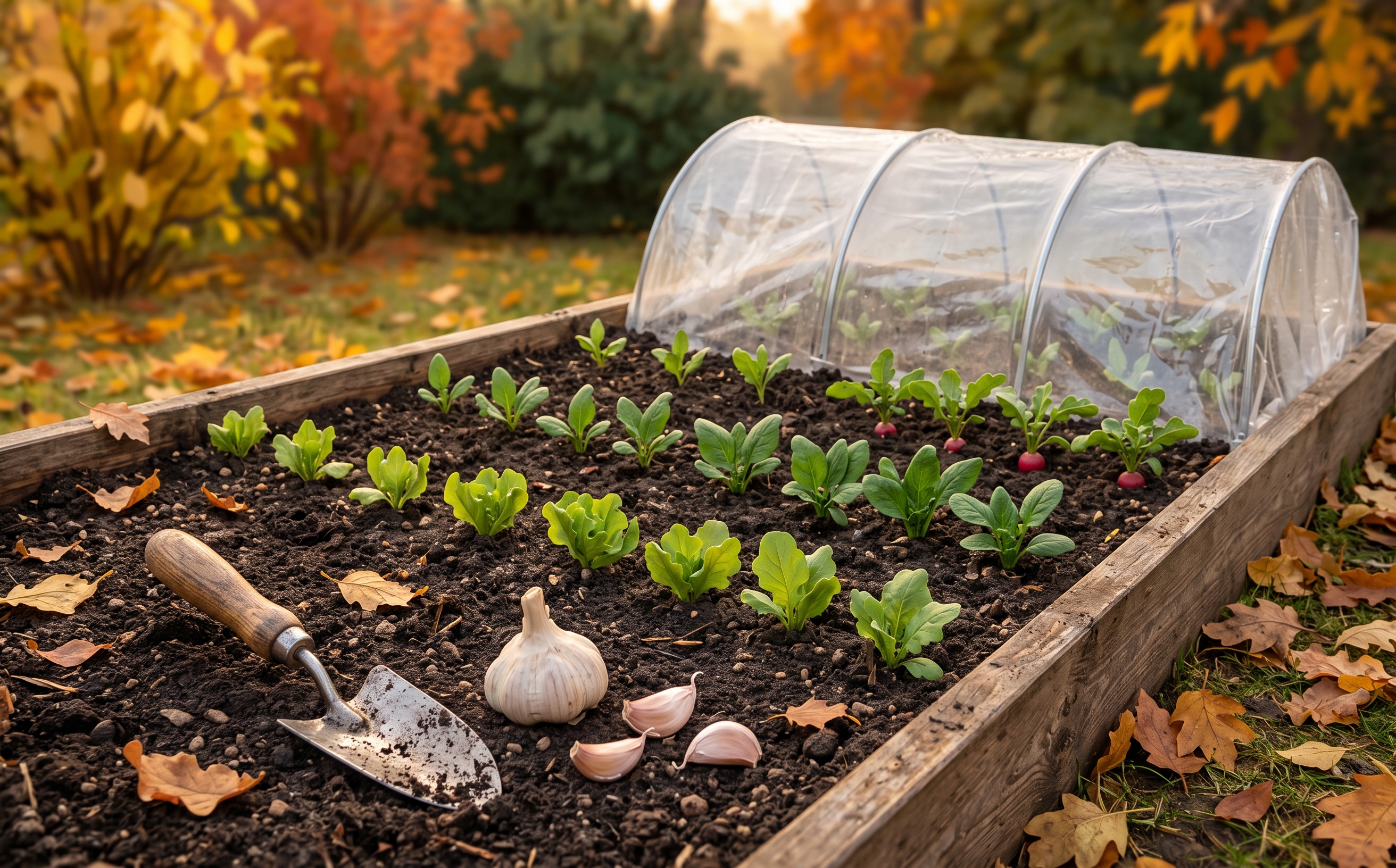
My first October, I decided the garden was over. I pulled the last tomatoes, coiled the hoses, and told myself I would be back in May. Very tidy. Very final.
Two beds over, my neighbor was tucking garlic into the ground and sowing a row of something green. She ate salad off that bed in November. I ate takeout and felt silly.
October is not the end. Depending on where you live, it is either your last quick sowing window or the middle of the best gardening weather you get all year. Here is how to tell which October you have, and what to put in the ground this week.
Is it too late to plant in October?
In zone 7 and warmer, no. Fast crops like radishes, arugula, spinach and leaf lettuce still finish if you sow in the first half of the month, and a cheap row cover buys the rest weeks more. In zones 3 to 6, the outdoor salad window is mostly closed, but October is prime time for garlic, spring-sown spinach, and a cover crop over the empty beds. Nobody's October is actually empty.
You need one number to run all of this: your average first frost date. Search your zip or postal code plus "first frost date," write it on the back of the seed packet, and let that date make every call below instead of the calendar.
Download the free Beginner's Gardening Checklist
A simple two-page list of the supplies and seeds a first garden actually needs. Tell me where to send it and it's yours.
Form not loading? Some ad-blockers hide it. Tap here to sign up instead.
Do this math before you open a packet
Take the days to maturity printed on the packet, add about 14 days for October's short daylight, and count backward from your first frost date. If today lands before that day, plant it. If it doesn't, pick something faster, plant it under a cover, or give the bed a different job.
The 14-day cushion matters more now than at any point in the year. Daylight is dropping fast, and growth slows with it, so a packet that says 40 days is describing June. In October that same crop is working with ten hours of light and falling. Spring math in late autumn leaves you a week short of harvest with frost on the way.
October by zone
Find your band and start there. Frost dates vary inside a zone, so treat these as the shape of the month and let your own date settle it.
Zones 3 to 5 (ground freezing soon). Your outdoor sowing window for a fall harvest has closed, so don't fight it. This month you plant garlic, sow spinach or mache that will sit tiny over winter and race ahead in March, and get a cover crop over anything bare. A cold frame or low tunnel changes the story completely: covered greens keep growing three to five weeks past your frost date.
Zones 6 and 7 (first frost late October into November). You still have the first two weeks for fast crops. Radishes, arugula, spinach, leaf lettuce and mustard all finish if they go in early, and anything later you sow to cut small. This is also the month for garlic in these zones. Get it in.
Zones 8 and 9 (first frost November, or none). October is when the garden wakes back up. Sow the whole cool-season list, set out broccoli, cabbage and kale transplants, and plan another round of greens for November. Garlic goes in next month.
Zone 10 and warmer. This is your spring. Heat is the limit, not frost. Direct sow beans and squash, start lettuce and brassicas in trays, and set out tomato and pepper transplants for a winter harvest.
The crops that still finish this month
If you are in zone 7 or warmer and sowing in the first half of October, these have the cushion. Days to maturity in brackets, before you add the fall factor.
Under 40 days. Radish (25 to 30) and arugula (30 to 40). Radishes are the fastest win in the whole garden and they taste better in cool soil than they ever do in summer, when they turn hot and woody.
40 to 50 days. Spinach (40 to 45), leaf lettuce (45 to 50, cut it as baby leaves), mustard greens (40 to 45) and cilantro (45 to 50, which finally stops bolting once nights cool off).
Sown now, harvested in spring. Spinach and mache, in any zone. They germinate, make a few small leaves, and sit under mulch or snow all winter, then take off weeks before you could work the soil in spring. Ten minutes now for the earliest harvest of next year.
Read the number on the packet rather than the picture, because two varieties of the same crop can differ by 30 days, and in October that gap decides everything. I've ordered from SeedsNow for years; non-GMO and they've never let me down.
Pro tip: A three-dollar length of row cover over hoops is the highest-value thing you can add to an October garden. It holds a few degrees of warmth, keeps a light frost off tender leaves, and turns "too late" into "another month of salad." Weigh the edges down with bricks or soil, because wind is the only thing that beats it.
Garlic, and the one mistake to avoid
October is the month for garlic in zones 6 and 7, and late September into early October in colder zones. Garlic wants to go in two to four weeks before the soil freezes: long enough to grow roots, not so early that it pushes up tall green tops that winter will burn off.
Break the head into cloves the day you plant, keep the papery skin on, and push each clove pointy end up about two inches deep and six inches apart. Then mulch four inches deep with straw or shredded leaves and forget it until spring. Skip the bulb in your kitchen drawer, since supermarket garlic is often treated to stop it sprouting: here's why grocery store garlic is a gamble.
What to do with the beds you're not planting
Bare soil over winter loses nutrients to rain and snowmelt, packs down hard, and comes out of spring worse than it went in. A cover crop fixes all of it for the price of a bag of seed. Cereal rye is the pick for a late-October sowing because it keeps growing in the cold, though you cut it down in spring and wait a couple of weeks before planting. Where you don't sow a cover crop, at least cover the soil with a few inches of shredded leaves or straw. The worms spend the winter pulling it under for you.
Go do one thing this week
Look up your first frost date. That single number tells you which October you're living in, and everything else follows. Then either sow a row of radishes and one of spinach, or get your garlic in the ground, depending on what the date says.
Still deciding whether it's worth it this late? I made the same case last month for September, and those beds are feeding me now. The garden doesn't close in October. It just asks for less.
Common questions about planting in October
Is it too late to plant vegetables in October?
In zone 7 and warmer, no. Radishes, arugula, spinach, leaf lettuce and mustard sown in the first half of October still finish before frost, and a low tunnel or row cover extends that by several weeks. In zones 3 to 6 the outdoor salad window is mostly closed, but October is the right time to plant garlic, to sow spinach and mache for an early spring harvest, and to put a cover crop over empty beds. Run the math first: days to maturity, plus 14 days for short daylight, counted back from your first frost date.
What is the fastest vegetable to plant in October?
Radishes, at 25 to 30 days, are the fastest thing you can plant in October, and they taste better in cool soil than in summer heat. Arugula (30 to 40 days) and baby leaf lettuce and spinach cut small (about 30 days for a first cutting) are close behind. Under a cold frame or a low tunnel, all of these keep producing well past your first frost date, so a fast crop plus a cheap cover is the surest October harvest for a beginner.
Do fall vegetables need to be covered at night in October?
Not every night, and not yet. Watch the ten-day forecast and cover only when frost actually threatens. Tender crops like lettuce and leftover summer plants want protection once nights approach 32F, so drape row cover or an old sheet over hoops before dusk and take it off in the morning. Hardy crops, kale, spinach, carrots and leeks, shrug off a light frost and often get sweeter for it, so leave those uncovered until a hard freeze below 28F is on the way. If it's carrots you're deciding about, the shoulder test tells you whether to pull them or mulch them.
Want the full beginner's path from bare patch to thriving garden in one place? It's all in my Backyard Garden book for beginners.
Happy growing!
Priscilla
Get the free Beginner's Gardening Checklist
Form not loading? Some ad-blockers hide it. Tap here to sign up instead.
Plus one honest, helpful email a week. No spam, unsubscribe anytime.